
Why Private Equity Buyouts Are Taking the Wheel of Indian Businesses
This blog breaks down how private equity buyouts work in India and why more promoters are opting for control deals. It also explains what changes after a buyout and how the outcome plays out for different stakeholders.

The way businesses operate in India is changing faster than ever. Many of the companies we’ve known for years, whether family-run manufacturers or growing mid-sized brands, are entering a new phase.
Instead of seeking investors who own a small piece of the pie, they’re opening the door to private equity buyouts where investors take majority control and help the company reach the next level.
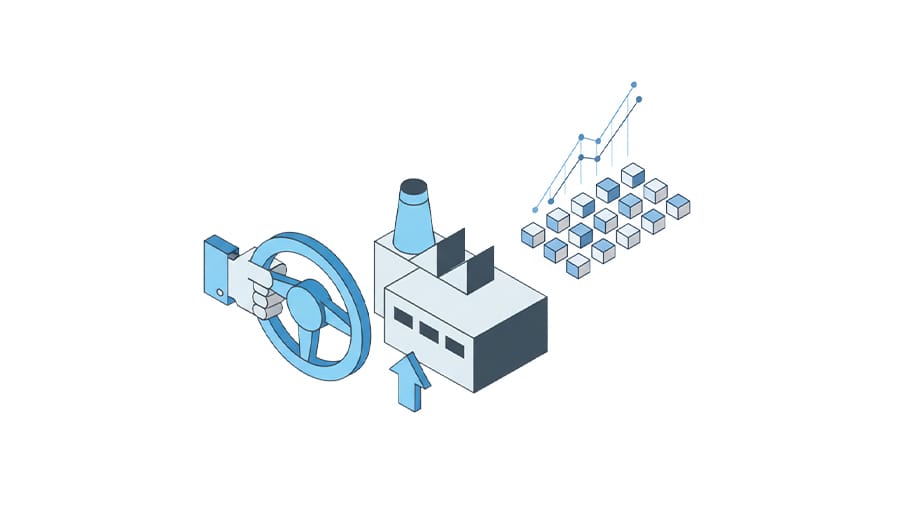
Think of a traditional investor as a friendly spectator cheering from the sidelines. A private equity (PE) fund executing a buyout is like a new owner who steps onto the field, takes the manager’s headset and starts running the team.
What exactly is a buyout?
Think of a buyout as a change of hands with purpose.
It happens when a private equity fund buys control (usually over 50%) of a company.
This gives the PE fund the power to make major decisions like bringing in professional managers, improving operations and helping the business grow faster.
The goal is to fix, improve and scale the company to a level where it becomes more profitable and then sell it in 3 to 6 years for a larger profit, either through an IPO or a sale to a strategic buyer.
Why is India seeing a buyout boom?
India’s market was once dominated by funds taking small minority stakes. They’d buy a slice, wait and hope the founders would deliver.
Now, the mindset has shifted driven by four primary forces shaping India’s business landscape today.
1. Succession Gaps in Family Businesses: Many founders or promoters are ready to retire or want to professionalise management but don’t have a successor ready. Selling control to a PE fund solves that instantly and brings in world-class leadership.
2. Corporate Carve-outs: Large Indian conglomerates are focusing on their core business, selling off non-essential divisions. PE funds are buying these carved-out units and scaling them independently.
3. Need for Liquidity and Debt Repair: Some owners simply need to cash out or reduce company debt. A buyout provides a clean, full exit and helps strengthen the balance sheet.
4. Market Maturity: India’s capital market has become deep and sophisticated enough to attract specialised global buyout funds. Sectors like financial services, IT and healthcare are especially attractive for these control deals.
All of this has made buyouts not just possible but increasingly popular.
The numbers tell the story
According to Bain & Company and VCCEdge, India’s private equity and venture capital market surged to around US$43 billion in 2024 with buyouts contributing more than half (about 51%) of total PE deal value - the highest share ever recorded.
In comparison, the market was only around US$400 million in 2012–13. That more than hundredfold leap in just over a decade is a clear sign of how mature India’s private capital ecosystem has become.
Sectors leading this shift include financial services, IT, manufacturing and healthcare with several large control deals announced in 2024–25.
How a buyout works (the 5-step plan)
Once a PE fund takes control the real work begins.
- Pick & Plan: The fund chooses a target company with clear potential for operational or governance improvement.
- Finance the Deal: The purchase is financed using a mix of equity (cash from the fund) and debt (loans).
- Take Control & Improve: The PE team brings in seasoned leadership, invests in technology, streamlines processes and executes a turnaround plan.
- Drive Growth: The company is professionalised, governance is cleaned up and bolt-on acquisitions are made to achieve scale and better margins.
- Exit: The improved company is sold in 3–6 years typically via an IPO or to a larger strategic buyer.
Buyouts are not takeovers,
they're transformations.
What happens after a buyout?
PE funds bring in professional leadership upgrade systems and invest in technology. They clean up the books, improve margins and sometimes acquire smaller companies to grow faster.
It’s like giving a promising business a second life with sharper strategy, stronger governance and faster execution.
When everything clicks the results show up in stronger performance, new jobs and valuable exits through IPOs or strategic sales.
Who benefits from this?
A buyout fundamentally changes a company’s culture for the better and with greater accountability.
The bigger picture
Buyouts are about capability more than just capital.
India’s growing appetite for control deals marks a deeper evolution in how investors think about growth. They’re no longer satisfied with passive ownership or waiting for others to execute. Today’s private equity funds want to shape strategy, drive efficiency and build lasting enterprises.
This shift reflects the maturity of India’s private capital ecosystem. It’s moving beyond funding startups to actively strengthening the foundations of Indian business, governance, scale and performance. Each buyout is a financial transformation, turning potential into sustained value.
As the ecosystem expands in size and sophistication, the next phase will be defined by discipline, data and speed. Funds that can blend operational insight with analytical precision to discover real value.
About Taghash
Taghash provides an end-to-end platform for venture funds, private equity, fund of funds, and other alternative investment funds. Over the last seven years, we have served as the tech arm for top VCs, helping them manage operations across deal flow, portfolio, fund, and LP management.
Trusted by leading fund managers like Blume Ventures, Kalaari Capital, and A91 Partners, we enable our clients to achieve greater success. Click here to book a demo.