
Investor Reporting for VC Funds: From 15 Days of Compilation to One-Day Readiness
Quarterly investor reporting slows down when portfolio data, fund records, accounting inputs and commentary are managed across disconnected workflows. This blog explains how connected reporting readiness helps VC fund teams reduce manual compilation and prepare LP summaries faster.


Quarterly investor reporting should not take half the month.
Yet many VC fund back-office, finance and investor reporting teams spend close to 15 days every quarter building LP summaries. The delay is not usually caused by a lack of discipline. It is caused by scattered data.
Portfolio metrics come from founders. Fund data sits with finance and operations. Investment updates come from the investment team. Accounting may be handled by a third-party provider. Commentary sits in partner notes, portfolio review comments, emails or internal updates. Then all of it has to be shaped into the fund’s own LP reporting template.
By the time the team has collected, checked, reconciled and formatted the pack, quarter-end reporting has already consumed valuable operating time.
Taghash helps reduce that effort by connecting the reporting inputs before the reporting cycle begins.
Why investor reporting becomes a 15-day exercise
Investor reporting depends on several workflows moving together.
Portfolio teams need founder-submitted MIS, operating metrics, revenue, burn, runway, valuation notes and qualitative updates. Fund operations teams need capital activity, NAV, ownership, investment records, transactions, expenses and distributions. Investment teams need to add performance commentary, risk notes and portfolio-level context. Finance teams may need to bring in accounting outputs from internal teams or third-party providers.
When these inputs sit in separate systems, reporting becomes a reconstruction exercise. Teams chase files, confirm versions, clean data, add commentary and manually build the LP pack.
The issue is not report generation alone. It is reporting readiness.
SEBI timelines make reporting discipline more important
For Indian AIFs, investor reporting also supports regulatory readiness. SEBI’s Investor Charter for AIFs refers to dissemination of NAV of the fund or scheme, financial information of investee companies and information on scheme or fund performance. It also refers to disclosures around material risks associated with the fund and portfolio investments.
The Investor Charter states that disclosure of financial information of investee companies for Category I and II AIFs is required within 180 days from year-end, or earlier as per fund documents. For Category III AIFs, it states that this disclosure is required within 60 days from quarter-end, or earlier as per fund documents. It also states that financial, risk management, operational, portfolio and transactional information regarding fund investments is to be disclosed periodically to investors.
SEBI also issued a circular titled Regulatory Reporting by AIFs on March 4, 2026. Fund teams should map their regulatory reporting workflows to the latest SEBI circulars and fund documents before finalizing reporting calendars.
Separately, SEBI issued a circular titled Reporting of value of units of Alternative Investment Funds (AIFs) to Depositories on February 6, 2026. This makes valuation records, NAV workflows and unit value reporting part of the same operating discipline fund teams need to maintain.
Taghash does not replace legal, accounting, compliance, valuation or audit professionals. It helps fund teams keep records, documents, workflows and reporting context connected so reviews, investor reporting and regulatory preparation can happen with better structure.
How Taghash connects the reporting layer
Taghash is a software platform and connected operating layer for private capital teams. It brings dealflow, portfolio management, fund operations, LP reporting, compliance work, documents, data, tasks, approvals and context into one connected workspace.
That matters because LP reporting is not a standalone task. It depends on the full fund operating layer.
With Taghash, portfolio data from founders can flow into structured company records. Fund data and investment records can stay connected to capital activity, ownership, valuations and transactions. Accounting inputs from third-party providers can be added as reviewed snapshots or supporting documents. Portfolio commentary can sit with the company record instead of being recreated from emails and notes.
This gives the reporting team one connected base to work from.
Portfolio data and commentary stay together
LPs need numbers, but they also need context.
A portfolio company’s revenue movement, runway, valuation change or missed milestone means little without commentary from the investment team. In many funds, that commentary is collected late in the reporting cycle.
Taghash Portfolio Management helps teams track company updates, financials, ownership, documents and portfolio metrics in one connected workspace, so they can monitor performance, identify risks and act earlier.
When reporting begins, the team is not starting from blank commentary fields. It can pull from context already maintained through portfolio reviews, comments and company-level records.
Fund data supports the LP reporting pack
Quarterly summaries also need fund-level accuracy.
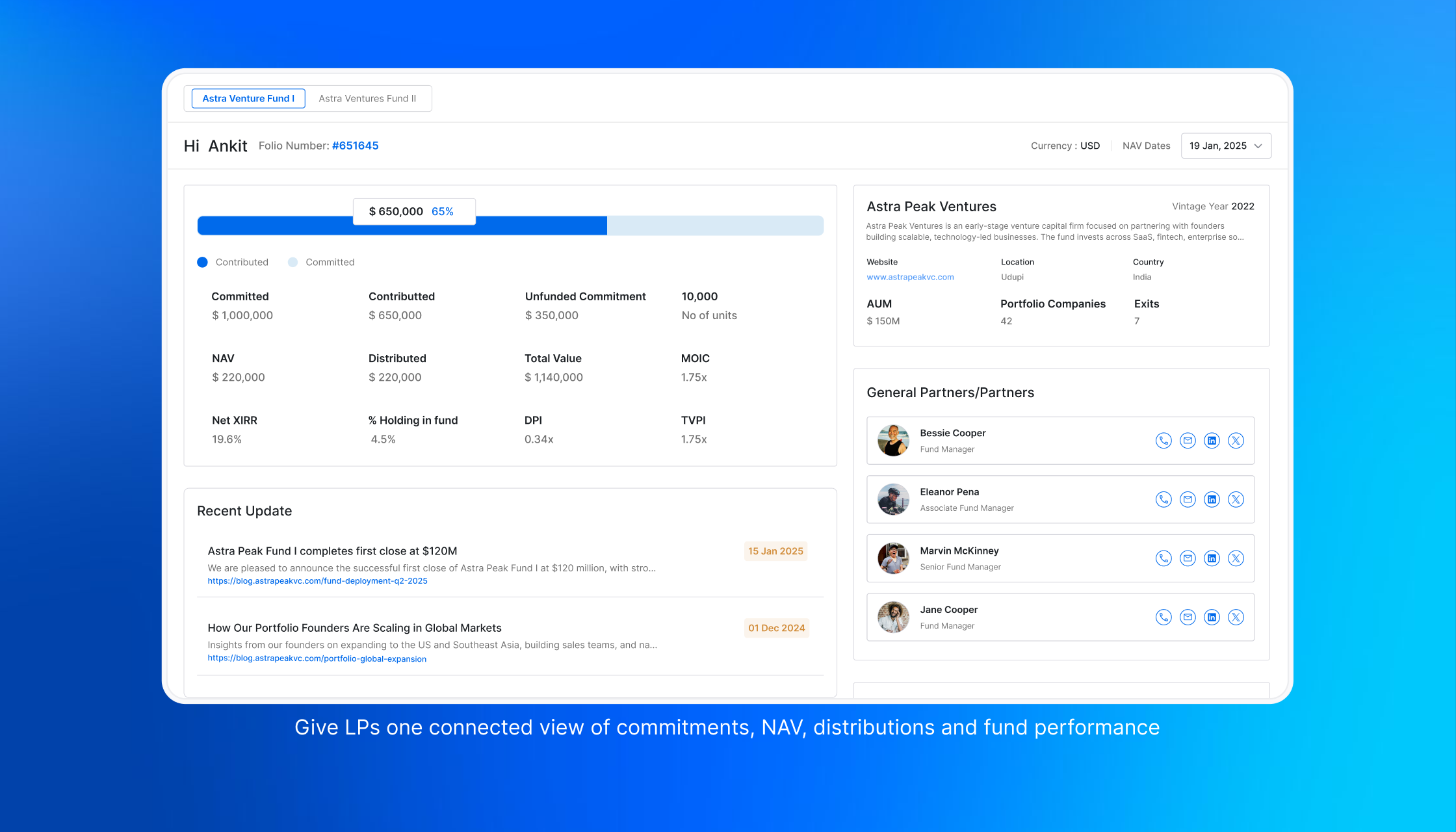
Taghash Fund Management supports tracking capital activity, fund performance, investor records, valuations, transactions and reporting across funds, SPVs and portfolios. This includes workflows around commitments, deployments, NAV, distributions, capital calls, expenses, valuation changes, realized value and unrealized value.
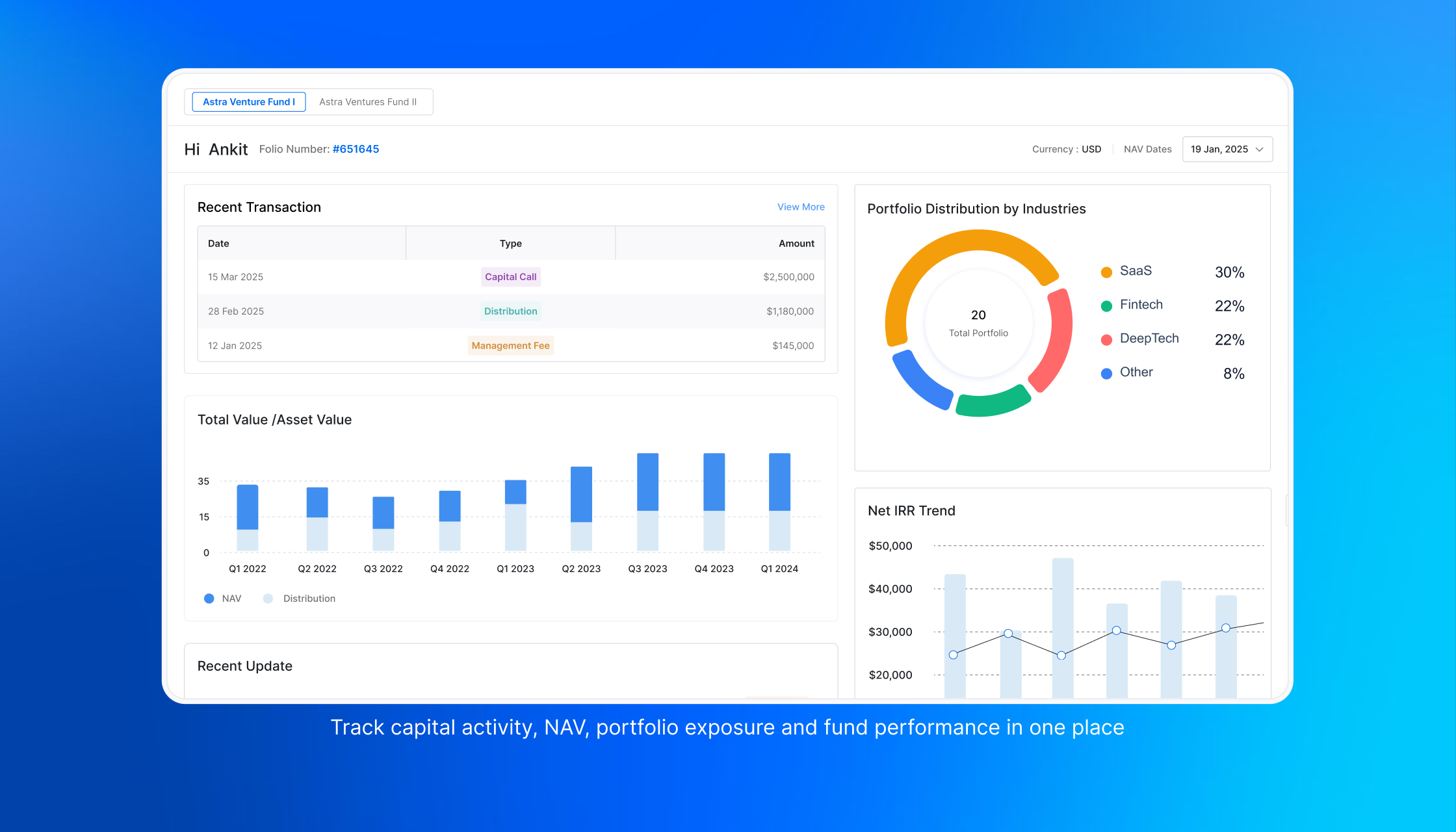
That connected fund data helps reduce back and forth between finance, operations, investment teams and investor relations. The reporting team can prepare from maintained records rather than rebuilding the same view each quarter.
The template engine brings the report together
Every VC fund has its own LP reporting format. The required metrics, portfolio sections, commentary style, fund summary and disclosure structure can vary.
Taghash’s template engine can be configured around the fund’s reporting format. Once portfolio data, fund data, investment records, accounting inputs and commentary are maintained in the platform, the reporting pack can be generated from the fund-defined template.
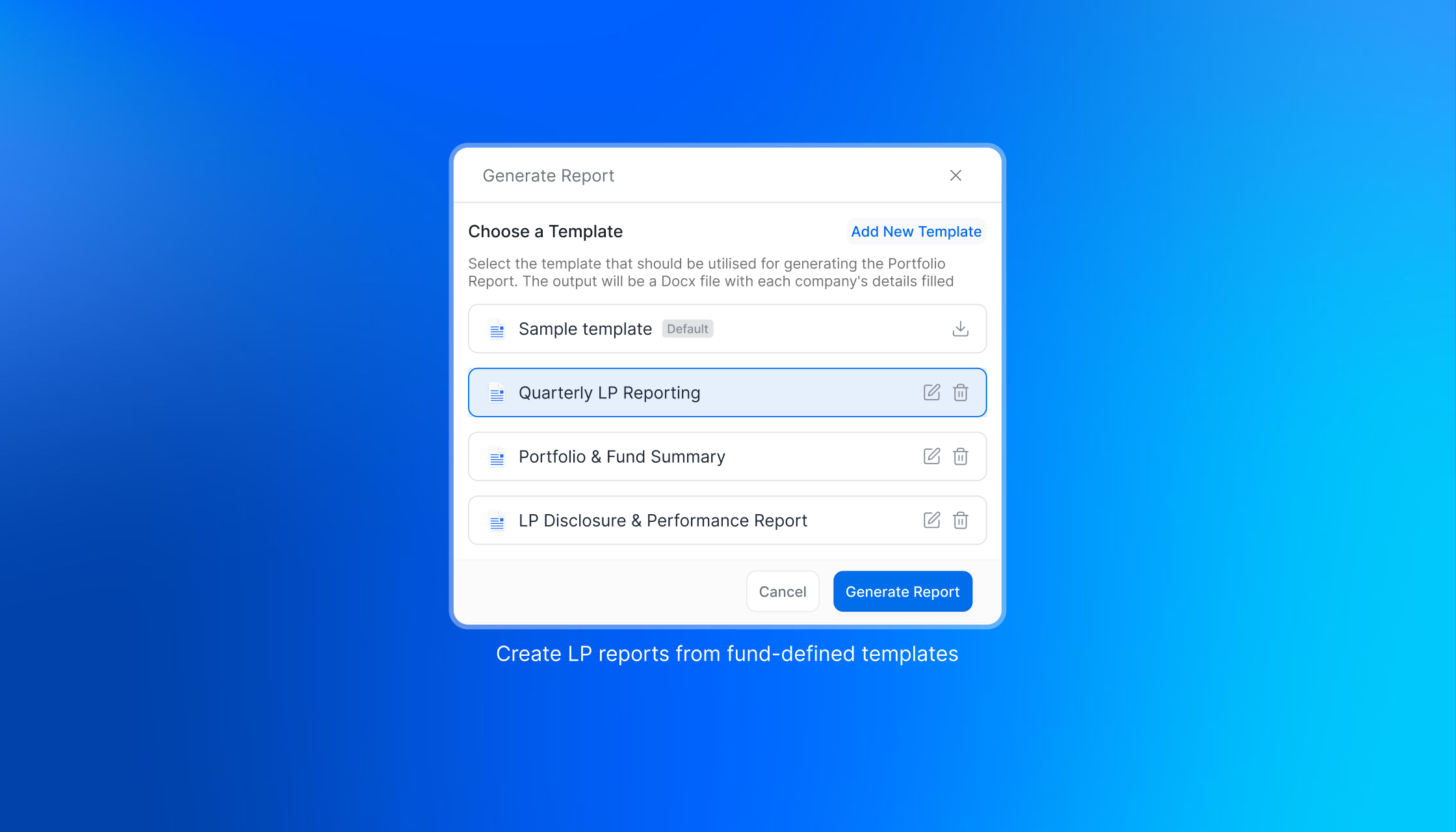
This is how a process that often takes close to 15 days can move toward one-day readiness. The work is not skipped. It is prepared continuously inside the operating layer, then reviewed before it is shared.
From manual compilation to reporting readiness
The old reporting cycle is built around chasing data.
The better model is connected reporting: founder data, investment updates, fund records, accounting inputs, portfolio commentary and LP templates working from the same workspace.
With Taghash, quarterly reporting becomes less about manual reconstruction and more about review, validation and approval. The team keeps control. The data stays connected. The LP report can be generated faster, with stronger context and cleaner operating discipline.
About Taghash
Taghash provides an end-to-end platform for venture funds, private equity, fund of funds and other alternative investment funds. Over the last seven years, we have served as the tech arm for top VCs, helping them manage operations across deal flow, portfolio, fund and LP management.
We also offer a services layer to support execution across data management, legal and compliance, fund administration coordination, trustee and custodian interfacing and valuations and advisory.
Trusted by leading fund managers like Blume Ventures, Kalaari Capital and A91 Partners, we enable our clients to achieve greater success. Click here to book a demo.