Early-Stage VC Portfolio Management: Tools and Tactics for Investors
Early-stage portfolio management gets harder when updates, MIS, ownership, valuations, documents and reporting inputs are scattered across emails, spreadsheets and shared drives. This blog covers how VC teams can improve visibility, spot risks earlier and run cleaner portfolio reviews.

Early-stage portfolio management is a context discipline.
After investment, a fund team needs more than periodic founder updates. It needs a working view of each company: financial metrics, operating metrics, ownership, valuation history, documents, follow-on activity, risks, support needs and reporting inputs.
That is difficult when updates arrive in different formats, documents sit in separate folders and the portfolio context depends on memory. Early-stage VC teams may be small, but the operating load grows quickly as the portfolio expands.
Taghash is built around this fund-team reality. It brings dealflow, relationship intelligence, portfolio management, fund operations, LP reporting, compliance work, documents, data and context into one connected workspace for private capital teams.
Why early-stage portfolio management gets messy
Early-stage companies change quickly. Revenue moves. Burn changes. Runway tightens. Hiring plans shift. Fundraising timelines move. Product progress and customer traction can change between reporting cycles.
For investors, this creates a practical challenge: the portfolio view becomes outdated unless updates, metrics, documents and ownership records are collected and maintained with discipline.
The common friction points are familiar:
- Founder updates are spread across emails, spreadsheets and shared drives
- MIS requests are tracked manually
- Company metrics are difficult to compare across different formats
- Ownership and dilution records are updated separately from company updates
- Valuation context is disconnected from supporting documents
- Portfolio reporting takes too much preparation before internal and LP reviews
- Risk signals are noticed late because the data is not organized
Better portfolio management starts by connecting these records to the workflow where the team reviews, acts and reports.
Read more: How to Build a Winning Investment Portfolio
5 The core tools early-stage VC teams need
1. A connected portfolio company record
Every portfolio company should have one shared record that carries the key operating context: company updates, financial metrics, operating metrics, ownership, valuation history, documents, notes, follow-on rounds and reporting status.
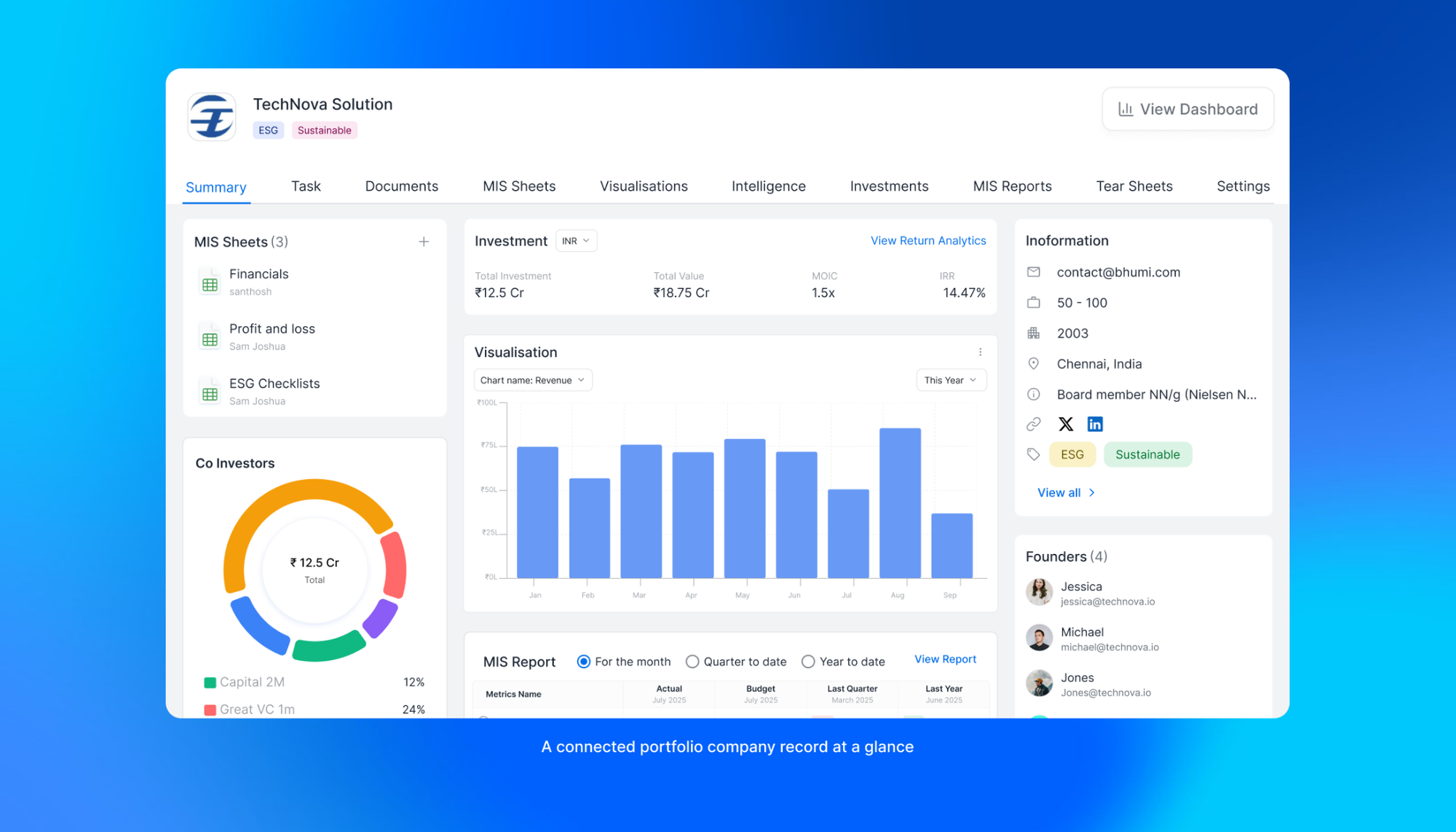
Taghash Portfolio Management is positioned around tracking company updates, financials, ownership, documents and portfolio metrics in one connected workspace, so teams can monitor performance, identify risks and act earlier.
For early-stage investors, this gives the team a clearer base for portfolio reviews. Instead of asking which file is current, the team can work from structured records connected to the company.
2. MIS collection that does not depend on chasing
MIS collection is one of the most important operating routines in an early-stage portfolio. It also becomes one of the easiest to neglect when companies submit updates inconsistently.
A stronger workflow tracks what has been requested, what has been received, what is pending and which records need review. The goal is not only collection. The goal is reliable portfolio visibility.
Taghash supports this workflow by helping teams automate MIS collection organize portfolio data, track submission status and turn company updates into structured records for reporting and review.
3. Metrics that match the company stage
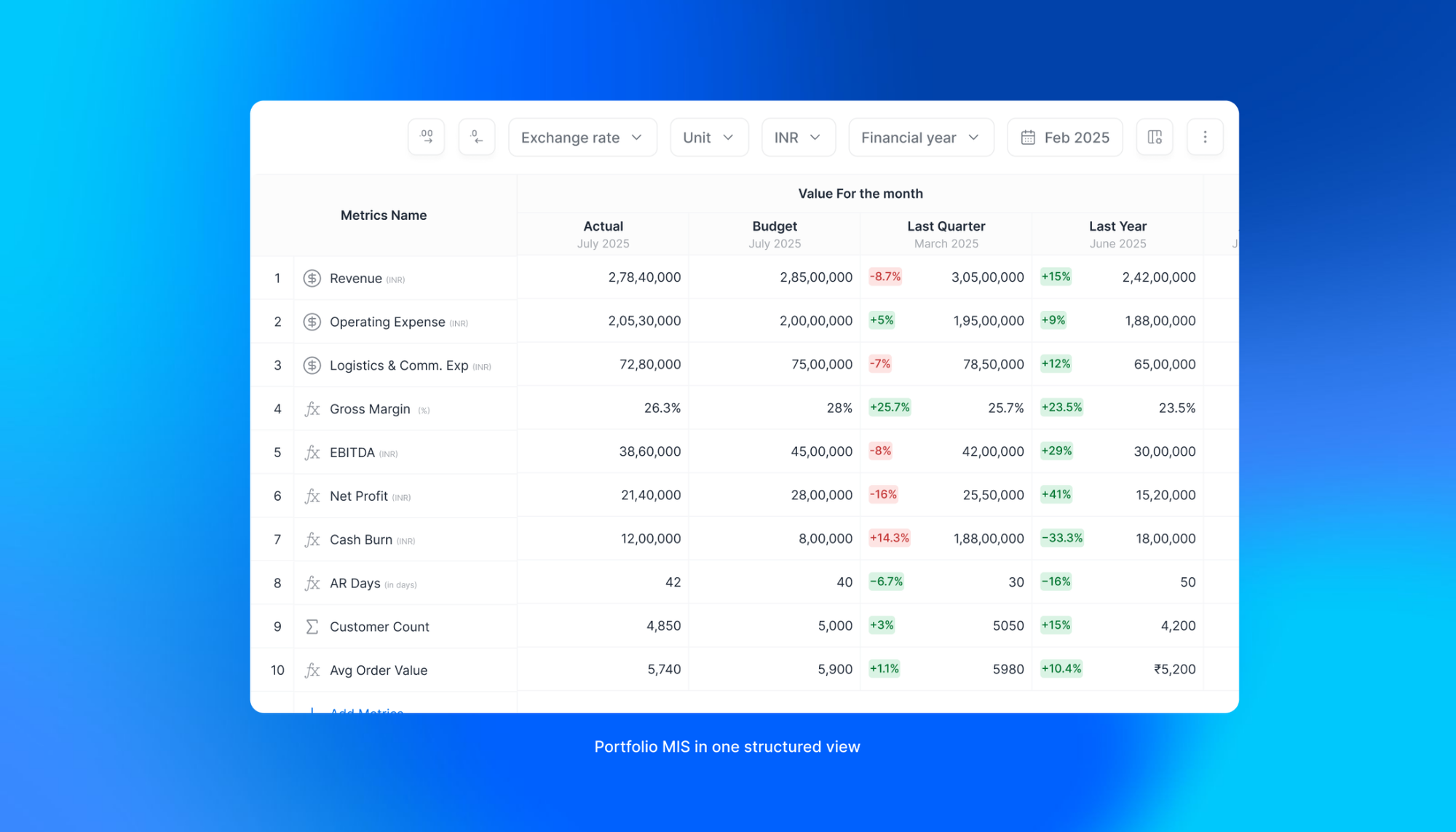
Early-stage portfolio metrics should be structured, but not forced into one rigid template. A SaaS company, marketplace, consumer brand and fintech business may need different operating views.
The portfolio system should support both fund-level consistency and company-specific depth. Core fields may include revenue, burn, runway, cash balance, customer metrics, valuation, ownership, investment cost and current value. Additional fields can reflect the sector, stage and board-level reporting needs.
Taghash’s portfolio vocabulary includes financial metrics, operating metrics, revenue, burn, runway, valuation, ownership, NAV, shareholding, dilution, investment cost, current value, follow-on rounds, exits, secondaries and valuation changes.
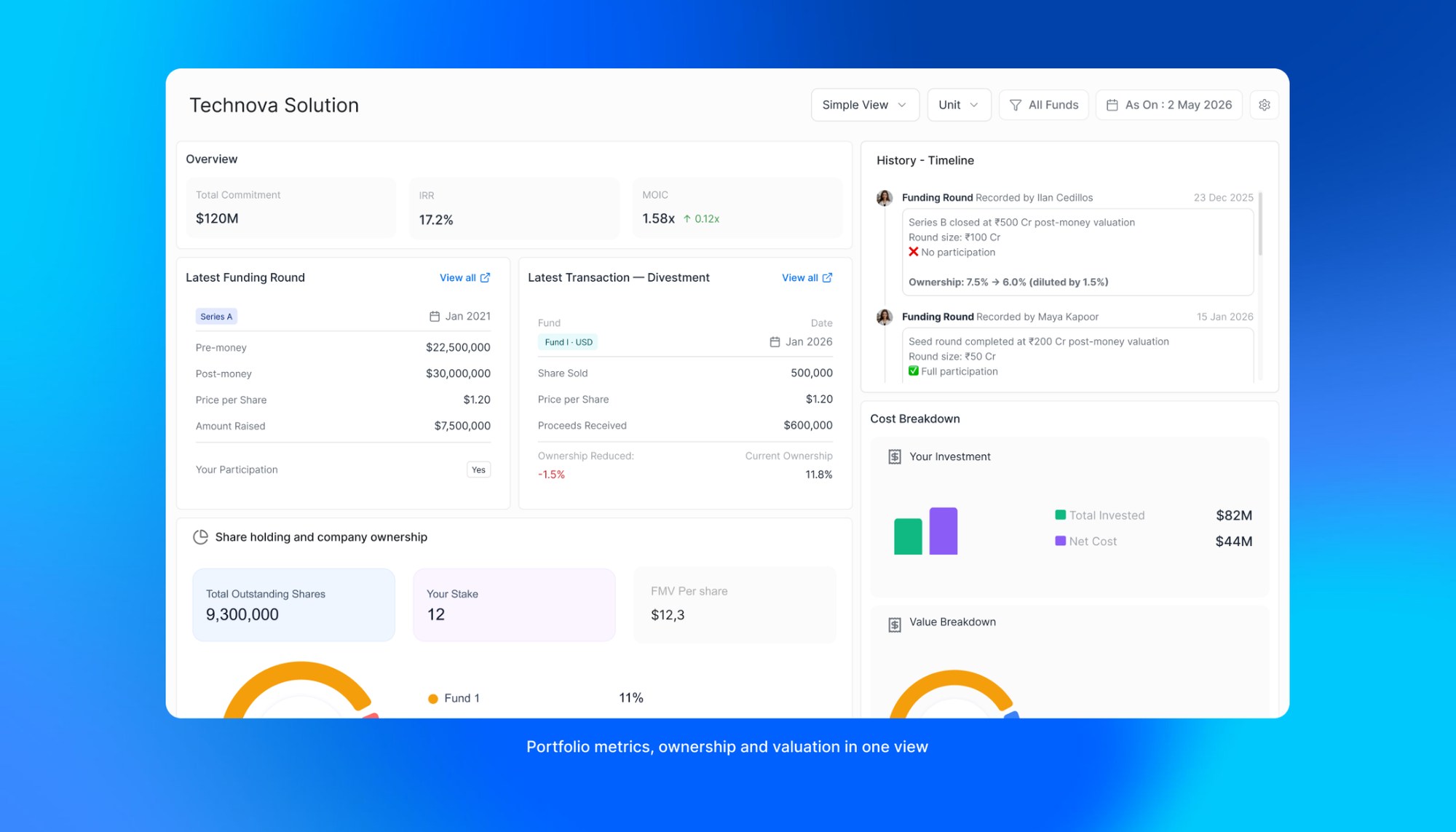
4. Ownership and valuation tracking
Portfolio management is not only about company updates. Fund teams also need to understand ownership, dilution, follow-on rounds, valuation movement and current value.
If ownership data sits in one file and company performance sits elsewhere, the investment team loses context. A company’s operating progress should sit close to the fund’s ownership position and valuation history.
This is where portfolio management and fund management connect. Taghash helps teams track ownership across portfolio companies, while Fund Management supports tracking capital activity, valuations, transactions and reporting across funds, SPVs and portfolios.
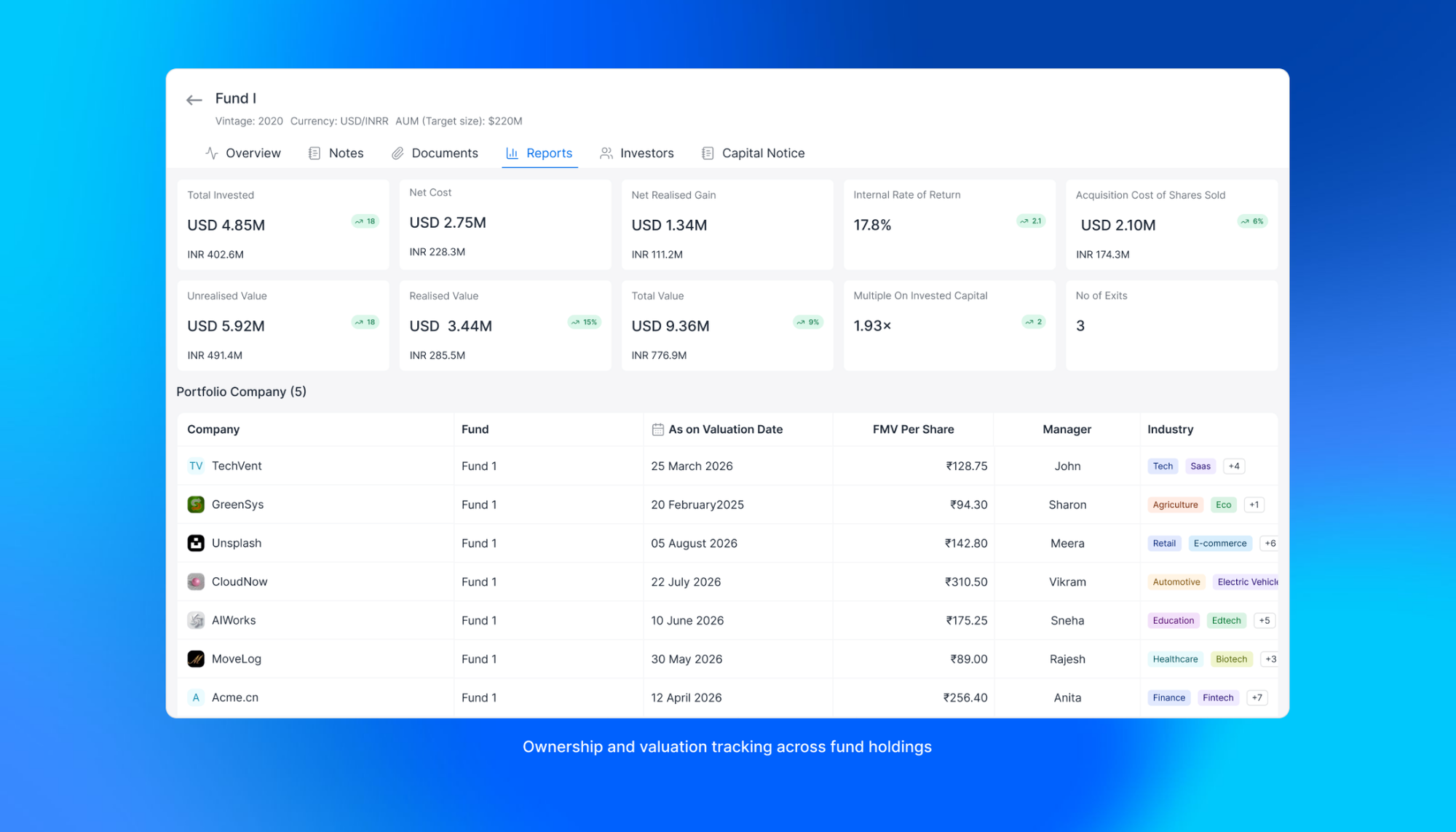
5. Reporting workflows built from live records
Portfolio reporting becomes harder when the team rebuilds updates every quarter. The same work repeats: collect MIS, clean files, ask for missing data, update charts, check ownership, prepare commentary and create outputs for internal reviews or LP reporting.
A better workflow keeps portfolio records current throughout the period. When review time arrives, the team works from the maintained data rather than the reconstructed files.
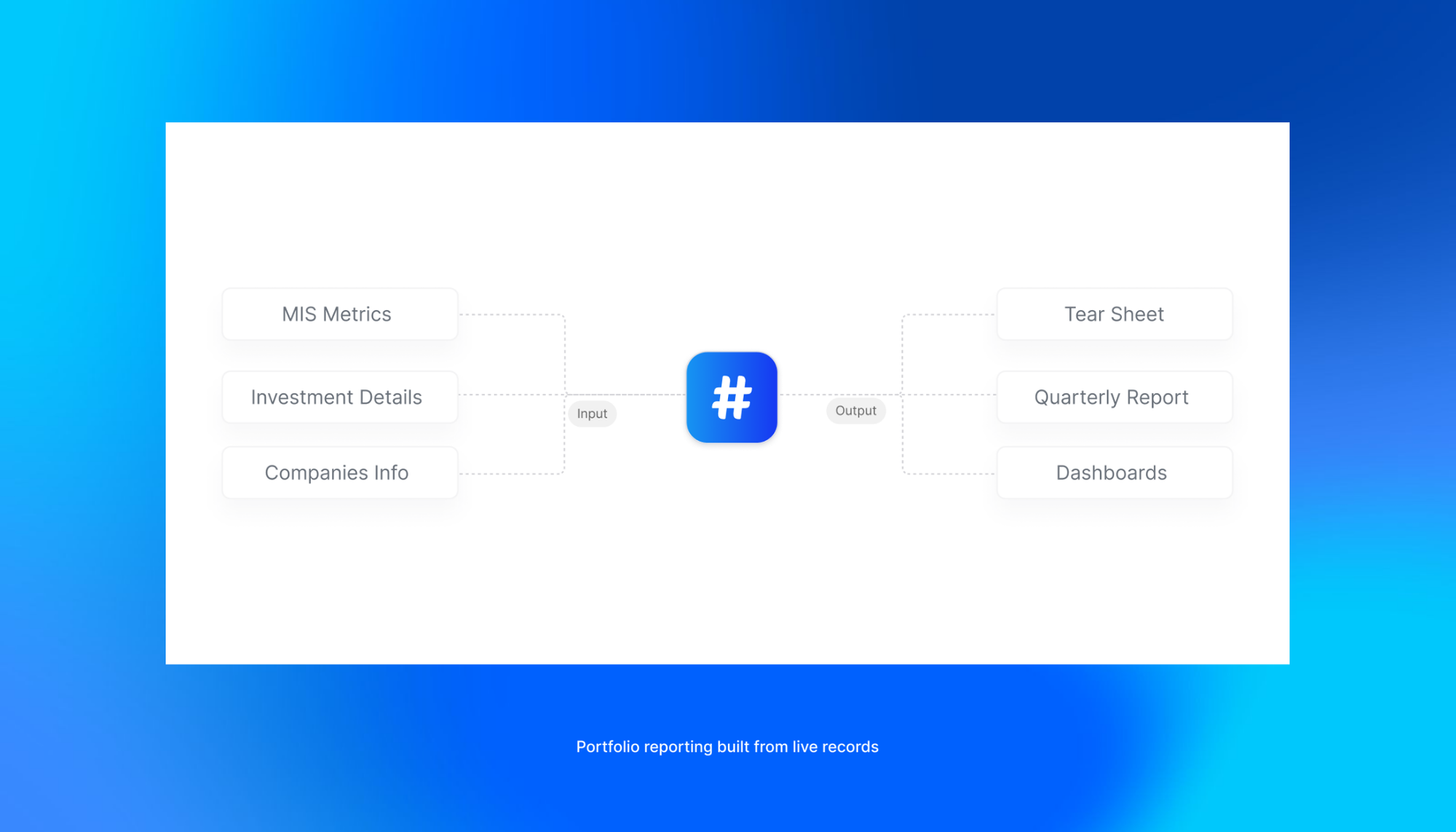
Taghash’s Portfolio Management reference states that the platform helps teams analyze, visualize and report performance, manage portfolio reporting and monitor portfolio activity with control.
Read more: How to Automate Portfolio Reporting for Venture Capital Funds
5 Tactics that make portfolio management work
1. Set a portfolio update rhythm
Early-stage VC teams should define the operating cadence for company updates. Monthly updates may be useful for active companies. Quarterly updates may be enough for others. High-touch companies may need additional fields around runway, hiring, fundraising, major customer updates or risk items.
The cadence should be visible to the full investment team. Missed updates should not depend on someone remembering to follow up.
2. Keep the deal context connected after the investment
The original investment thesis, diligence notes, IC memo, founder conversations and key risks should not disappear after the deal closes.
Early-stage portfolio management improves when deal context carries forward into portfolio tracking. The team can compare actual performance against the original thesis, revisit assumptions and prepare follow-on decisions with better continuity.
Taghash’s platform narrative emphasizes taking context forward from one stage to the next instead of rebuilding workflows again and again.
3. Track support needs, not just numbers
Early-stage investors do more than monitor performance. They help founders with hiring, follow-on fundraising, partnerships, customer introductions, strategy and governance.
The portfolio record should capture support needs and next steps. A founder update that mentions an enterprise hiring gap, fundraising plan or customer pipeline issue should become an actionable workflow, not an unread email.
4. Separate draft data from reviewed data
Portfolio data often comes from founder submissions, MIS files, board decks and informal updates. Not every input should immediately become an approved reporting record.
A disciplined workflow separates collected data from reviewed data. It should be clear what was submitted, what was validated by the team and what is ready for internal or LP-facing reporting.
This matters even more when AI is used to help summarize updates or prepare drafts. AI outputs should support review, not replace investment judgement.
5. Keep access aligned to roles
Portfolio data can include sensitive operating, financial, valuation and ownership information. Access should reflect the team’s role and need.
Taghash supports role-based access controls, allowing teams to define who can view, edit, approve or manage specific data and workflows across areas such as funds, deals, portfolio companies, LP records and reports.
For early-stage VC firms, that helps investment, portfolio, finance, operations and investor relations teams work with the context they need while keeping sensitive records controlled.
Learn more: Taghash’s Portfolio Valuation Services
Where AI fits in early-stage portfolio management
AI can help portfolio teams prepare summaries, compare company performance, draft portfolio updates and respond to internal data requests. The quality of those outputs depends on the quality and governance of the underlying data.
Taghash MCP gives AI tools secure, governed access to approved Taghash data and workflow context. In portfolio workflows, AI tools can work with approved portfolio company records, financial and operating metrics, documents, ownership details and valuation history to prepare summaries, analyze performance, compare companies and support valuation reviews.
This access should stay permissioned. Taghash MCP is framed around explicit authorization, existing Taghash permissions and human review for outputs and actions.
For early-stage VC teams, that means AI can support the workflow without becoming an uncontrolled decision layer.
What good portfolio management looks like
A strong early-stage portfolio management setup gives the fund team a reliable answer to practical questions:
Which companies have submitted MIS this period?
Which companies are missing key metrics?
Where has runway changed materially?
Which companies need follow-on review?
Which ownership or valuation records changed?
Which updates should go into the next internal review?
Which data is ready for LP reporting?
Which companies need partner or platform support?
These questions should not require a search across inboxes, spreadsheets and shared drives. They should be answerable from structured records connected to the team’s operating layer.
Learn More: Valuation techniques for private markets
A better operating model for early-stage investors
Early-stage portfolio management is not only a reporting exercise. It is how investors maintain visibility, support founders, identify risks, prepare follow-on decisions and communicate performance with confidence.
Taghash helps fund teams bring portfolio company updates, MIS collection, financial and operating metrics, ownership, valuations, documents and reporting workflows into one connected workspace.
The result is a more disciplined portfolio operating rhythm. Teams spend less time rebuilding context and more time reviewing performance, supporting companies and acting on the signals that matter.
About Taghash
Taghash provides an end-to-end platform for venture funds, private equity, fund of funds and other alternative investment funds. Over the last seven years, we have served as the tech arm for top VCs, helping them manage operations across deal flow, portfolio, fund and LP management.
We also offer a suite of services like Contributor onboarding/servicing, Fund accounting, Fund administration, Compliance Management, Reporting & Portfolio management and Tax compliance.
Trusted by leading fund managers like Blume Ventures, Kalaari Capital and A91 Partners, we enable our clients to achieve greater success. Click here to book a demo.