Secure AI for VC Firms: How Taghash Keeps Fund Data Governed and Permissioned
AI can help VC teams only when it works with the right fund context and stays under control. This blog explains how Taghash MCP connects AI to fund workflows while keeping access permissioned, governed and easier to review across deal flow, portfolio, LP, fund and reporting work.

VC firms want AI to assist with real-world fund management.
Not generic prompts. Not isolated summaries. Not outputs built from an incomplete context. Investment teams want AI to help prepare deal summaries, analyze portfolio MIS, draft investor updates, answer fund data questions and move workflows forward with the context already sitting across their operating layer.
That creates a serious operating question: how do you let AI work with sensitive fund data without creating uncontrolled access?
For private capital teams, AI only becomes useful when it is connected to the right context. It only becomes acceptable when that access is governed, permissioned and reviewable.
Taghash MCP is built around that balance.
VC fund data needs context and control
Fund data is not one flat database. It sits across dealflow, relationship intelligence, portfolio management, fund operations, LP reporting, compliance work, documents, tasks, approvals and reporting workflows. Taghash is positioned as a software platform and connected operating layer that brings those workflows, documents, data and context into one workspace for private capital teams.
That connected context matters because AI is only as useful as the information it can safely work with.
A deal summary needs the latest notes, founder conversations, deck information and pipeline stage. A portfolio update needs approved company records, operating metrics, ownership details, valuation history and documents. An LP response needs investor records, capital activity, reporting history and relevant documents.
Without governed access, teams face two challenges:
1. Keep AI disconnected from fund workflows
2. Copy sensitive information into external systems manually.
The first one limits usefulness. The second creates unnecessary risk and weakens control.
What Taghash MCP enables
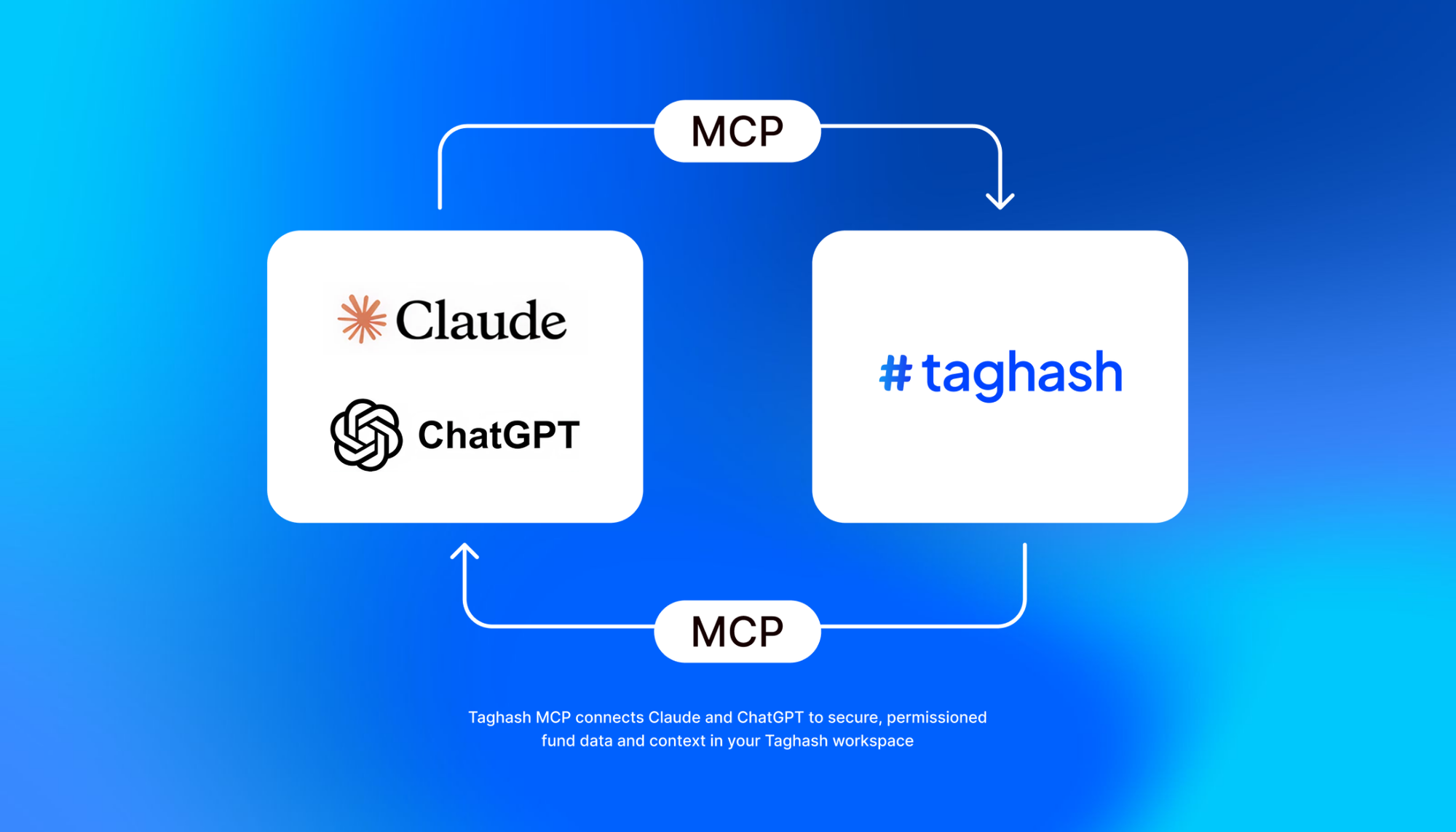
Taghash MCP lets users connect AI systems such as ChatGPT or Claude-style assistants to the Taghash workspace through the Model Context Protocol. The purpose is to give AI secure access to approved Taghash context so teams can generate outputs such as deal summaries, portfolio analysis, fund reports and investor updates with better workflow context.
This matters for VC firms because the work is already spread across multiple connected workflows:
- Dealflow and sourcing context
- Relationship history and warm intro paths
- Portfolio company updates, MIS and metrics
- Fund performance and capital activity
- LP records, reporting workflows and investor communications
- Documents, approvals, tasks and audit trails
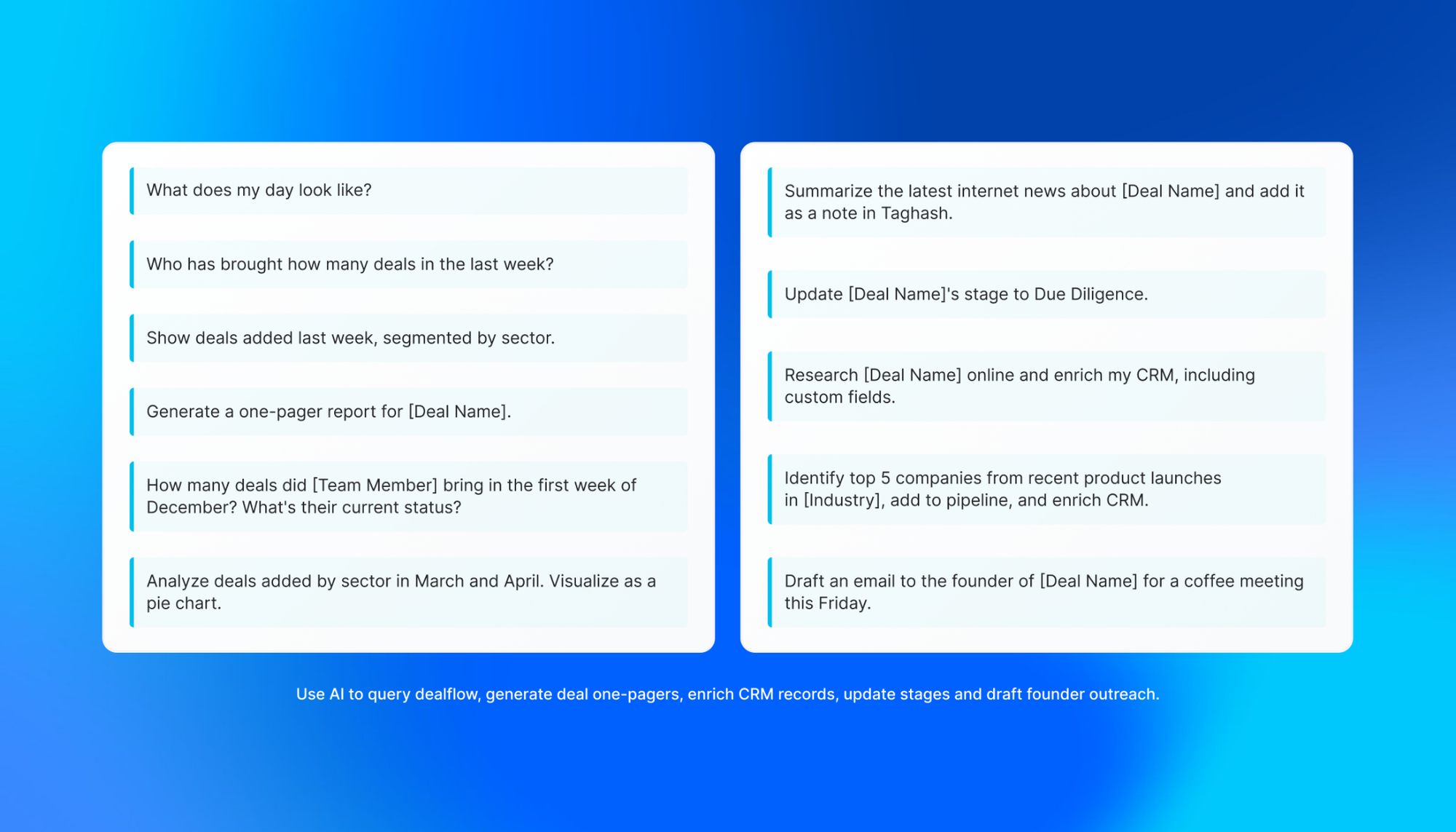
Taghash MCP helps AI work with live fund workflows already managed in Taghash, while keeping access aligned to the user’s permissions.
Permissioned access by design
Secure AI starts with a simple rule: AI should not see more than the user is allowed to see.
Taghash MCP follows that principle. AI interactions stay limited to the data each user is already permitted to access in Taghash. The AI system inherits existing Taghash permissions and cannot access information outside the user’s approved access.
For a VC firm, permission alignment matters across teams.
An investment analyst may need access to active deal records and diligence notes. A portfolio team member may need the portfolio company's MIS and reporting context. Investor relations may need LP records, reporting packs and communication history. A finance or operations user may need capital activity, NAV updates, transaction records and fund reporting data.
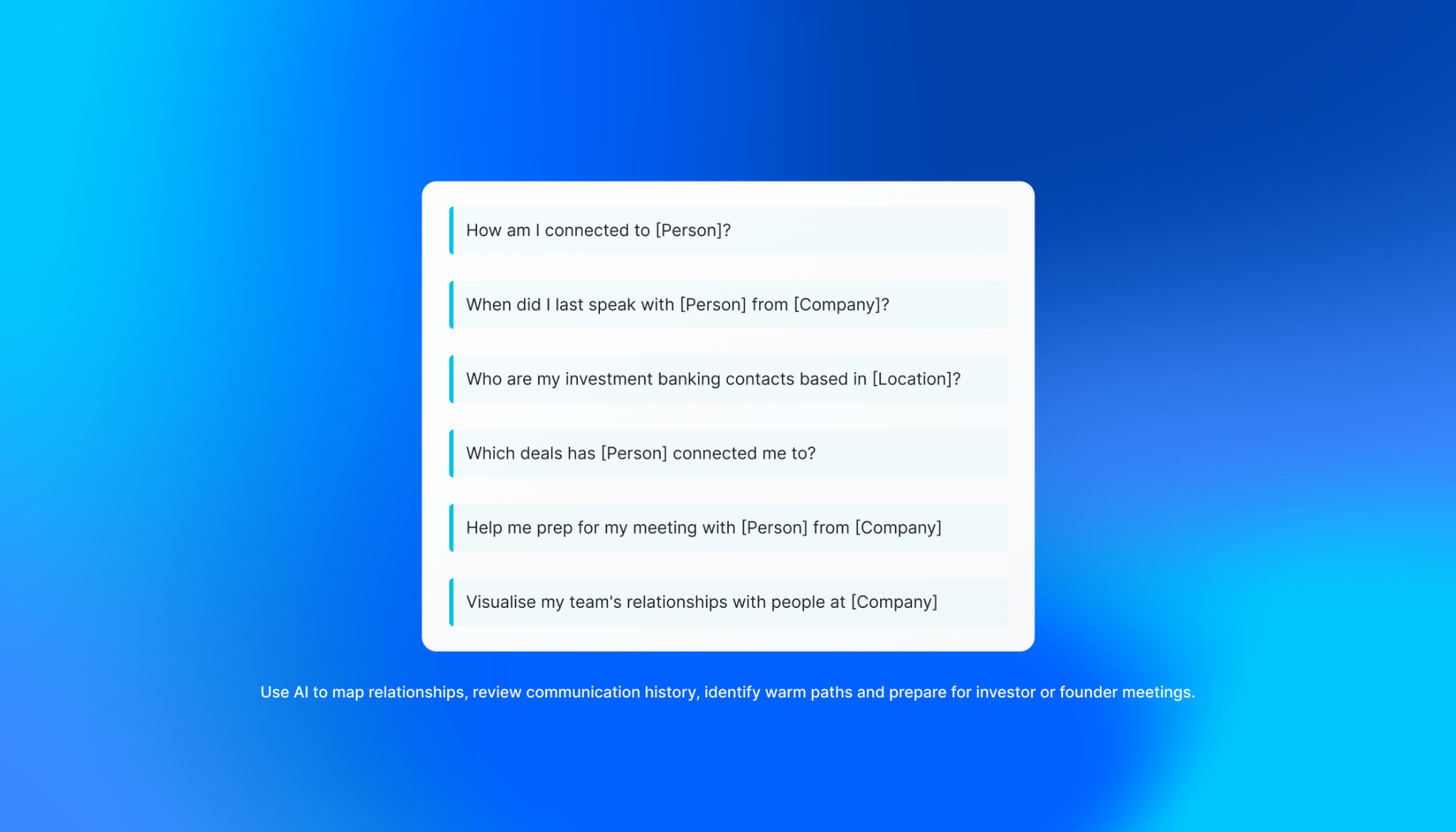
Each role works with a different context. AI access should reflect those boundaries.
Taghash keeps that access connected to the same operating structure already used by the fund team, instead of creating a separate AI access layer that has to be managed independently.
Explicit authorization before access
AI access should not be assumed. It should be authorized.
Taghash’s MCP security framing is based on limited, explicit access. AI systems can only access data explicitly authorized by the user. This keeps AI interaction tied to deliberate user action, rather than uncontrolled or background access.
That is important for sensitive fund work.
A VC firm may have confidential deal materials, portfolio performance data, investor information, valuation notes, board updates and internal memos inside its workspace. Secure AI should help teams work with that context, but only within approved boundaries.
Explicit authorization gives teams more control over what AI can access and when it can access it.
Learn more: How to Unlock Your AI's Full Potential with Taghash
No credential storage
Credential handling is another critical part of secure AI access.
Taghash’s MCP reference states that credentials are never passed through or stored by the AI system. Access is granted through short-lived secure tokens.
This reduces the risk of long-lived credentials being exposed through an AI workflow. It also helps keep access controlled through secure session-based authorization rather than permanent credential sharing.
For fund teams, this is a practical control. AI should not become a new place where sensitive access credentials live.
Human review stays in the workflow
AI can generate useful drafts, summaries, comparisons and next-step suggestions. It can also produce incomplete or incorrect outputs.
That is why Taghash’s MCP guidance keeps human review in the loop. AI-generated content should be reviewed, especially for emails, memos, reports, investor responses and workflow updates. Users should also verify AI-proposed actions, particularly when actions modify or add data in Taghash.
This is the right model for VC firms.
AI can help prepare an IC memo draft, but the investment team still owns the judgement. It can draft a portfolio summary, but the team should review the numbers, context and interpretation. It can prepare an investor response, but investor relations should approve the final communication.
Secure AI for private capital is not autonomous decision-making. It is governed assistance inside controlled workflows.
Read more: How Taghash Integrations Connect Tools Across Private Capital Workflows
Security controls around the operating layer
Taghash’s broader security language supports the same principle: protect sensitive fund data while keeping workflows usable.
The security reference includes role-based access control, encrypted data protection, audit trails and secure integrations. It also states that Taghash operates on SOC 2 certified systems and controls, supported by regular VAPT and ongoing monitoring.
For VC firms, these controls support operating discipline across the full fund lifecycle. Access stays role-aligned. Sensitive actions remain under user control. Audit trails help teams understand activity. Secure integrations help connect workflows without weakening visibility.
No platform can eliminate all risk and AI outputs should never be treated as automatically correct. The value is in giving fund teams a governed way to use AI with the data and workflow context they already manage.
Secure AI should improve workflow continuity
The strongest AI use cases in VC are not isolated tasks. They sit inside fund workflows.
A team may ask AI to summarize a deal before a Monday pipeline review. Another user may prepare a portfolio company update using approved MIS, valuation history and ownership records. Investor relations may draft a response to an LP query based on approved capital account history and reporting context.
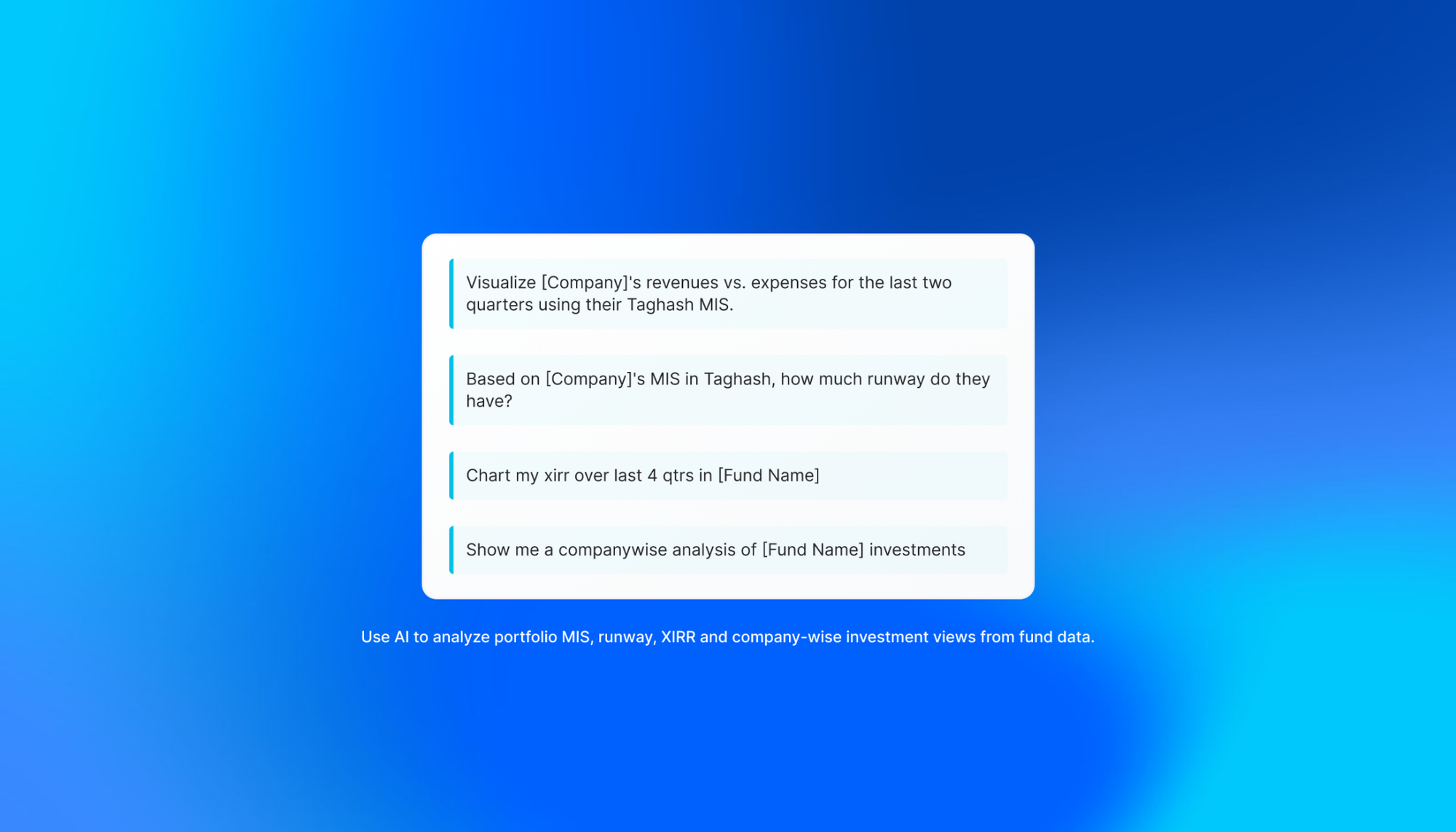
In each case, the value comes from continuity. The AI system can work with approved Taghash context, but access remains permissioned and outputs remain subject to user review.
That is how AI becomes useful without breaking operating control.
The fund data layer matters
AI adoption in VC firms will not be judged only by output quality. It will be judged by how well sensitive data is governed.
Fund teams need answers to practical questions:
Who can access which data?
Was access explicitly authorized?
Do permissions carry through?
Are credentials protected?
Can AI-generated content be reviewed before it becomes part of the workflow?
Can the team maintain visibility across documents, records, reports, approvals and actions?
Taghash MCP is framed around those questions. It gives AI secure, governed access to approved Taghash data and workflow context, while keeping permissions, authorization and human review at the center.
Read more: Granola to Taghash Through MCP: A Smarter Meeting Notes Workflow for Private Capital
AI for VC firms needs guardrails, not guesswork
VC firms do not need AI that sits outside their operating model. They need AI that can work with fund context safely.
Taghash helps private capital teams bring their fund workflows, documents, data and context into one connected operating layer. With Taghash MCP, AI can work with approved data from that operating layer while following existing permissions, explicit authorization, short-lived secure tokens and user review.
That is the foundation for secure AI in venture capital: more useful context, stronger access control and a clearer path from AI output to reviewed workflow action.
About Taghash
Taghash provides an end-to-end platform for venture funds, private equity, fund of funds and other alternative investment funds. Over the last seven years, we have served as the tech arm for top VCs, helping them manage operations across deal flow, portfolio, fund and LP management.
We also offer a suite of services like Contributor onboarding/servicing, Fund accounting, Fund administration, Compliance Management, Reporting & Portfolio management and Tax compliance.
Trusted by leading fund managers like Blume Ventures, Kalaari Capital and A91 Partners, we enable our clients to achieve greater success. Click here to book a demo.