


Fund performance is only as reliable as the performance inputs that support it. This blog explains how VC and PE teams can keep those inputs connected and track portfolio value across funds, SPVs and portfolio companies with more structure, visibility and control.

Tanupreet Kaur
Jul 21, 2026
-
6
min to read
Fund performance is not a single number.
For VC and PE firms, performance is built across many parts: commitments, deployments, follow-on rounds, exits, write-offs, ownership changes, valuation movements, NAV, distributions, unrealized gains, realized value, fund expenses and LP reporting outputs.
Each number depends on context. A valuation update needs portfolio company data. A NAV movement needs transaction history and valuation records. A fund dashboard needs clean capital activity, ownership and performance metrics. An investor update needs confidence that the underlying records are current.
When this work is managed across spreadsheets, email attachments, fund documents and disconnected systems, portfolio value becomes harder to track with discipline. Teams spend time reconciling data instead of reviewing performance, understanding movement and preparing reliable reports.
Taghash’s Fund Management module is built for this operating reality. It helps private capital teams track capital activity and fund performance across funds, SPVs and portfolio companies while maintaining visibility into ownership, valuations, transactions and reporting metrics.
VC and PE portfolios do not stay still.
A company raises a follow-on round. An ownership percentage changes. A valuation is revised. A partial exit creates realized value. A write-off changes fund-level performance. Distributions move capital back to investors. NAV changes need to be reflected across fund dashboards, LP reports and management review outputs.
The difficulty is not only calculation. The larger challenge is keeping every input connected.
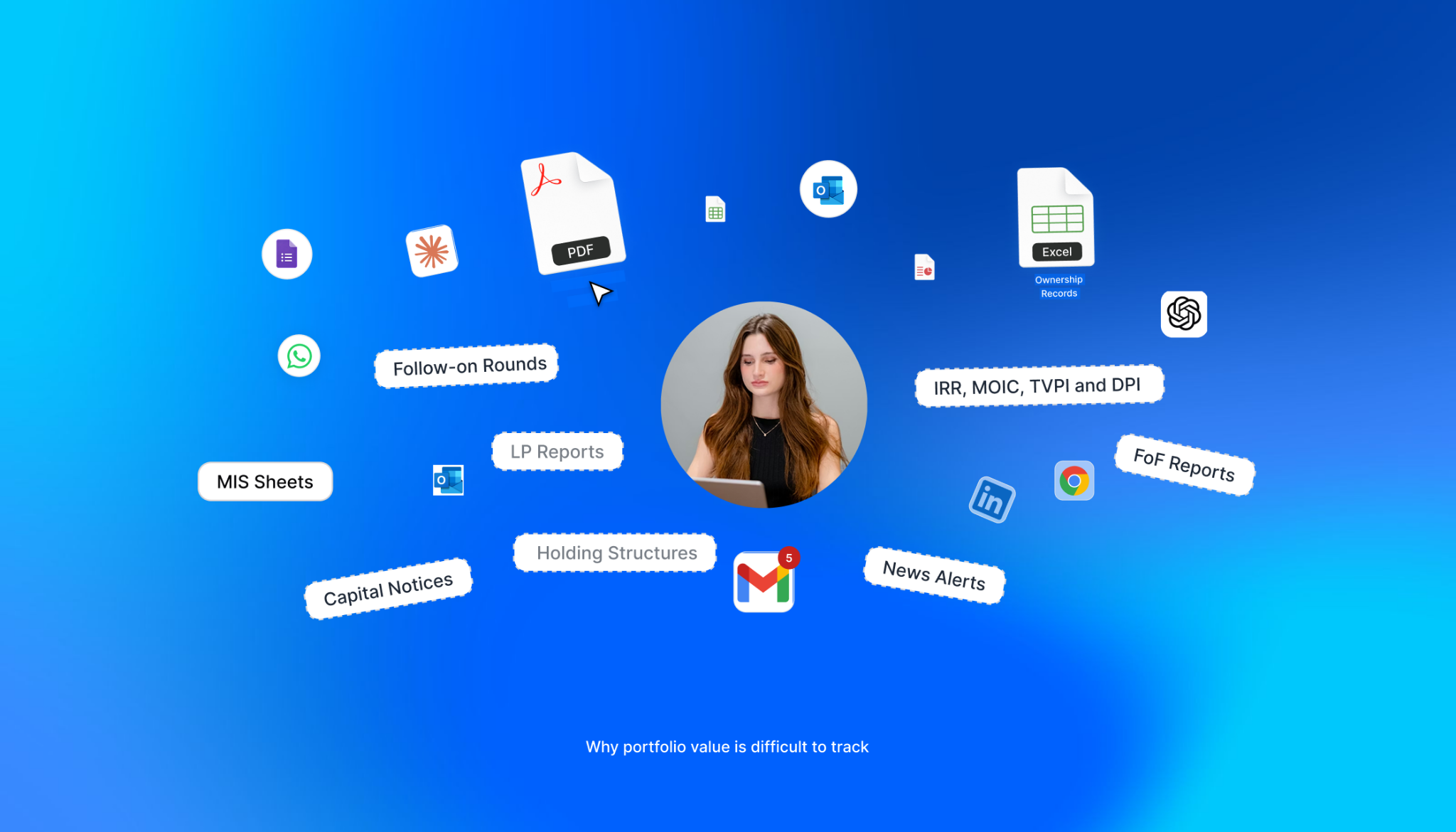
Fund teams often need to reconcile:
If these records sit in separate files, every reporting cycle becomes a reconstruction exercise. The team has to find the latest spreadsheet, confirm which version is approved, trace the source of each value and manually prepare outputs for internal and investor-facing use.
A smarter way to manage fund performance starts with one connected view of fund data.
Taghash brings fund structures, transactions, valuations, investor records, capital activity and reporting workflows into a connected workspace. Its Fund Management positioning is focused on tracking fund performance, capital activity, valuations, transactions and reporting across funds, SPVs and portfolios with the visibility needed to manage fund operations.
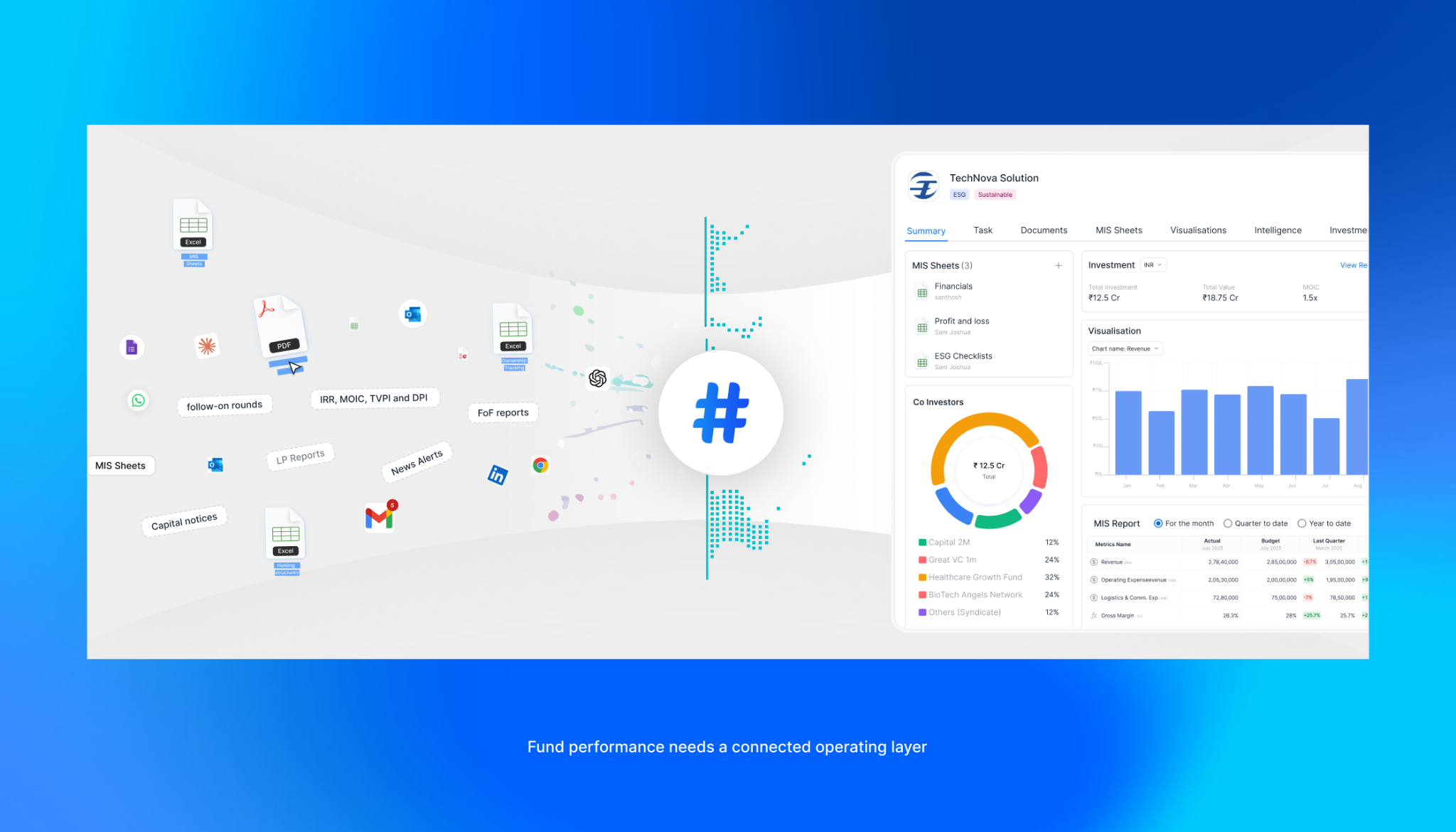
That matters because performance work is cross-functional.
Investment teams need to understand how portfolio value is moving. Finance and operations teams need accurate capital activity and NAV records. Partners need current fund dashboards for review meetings. Investor relations teams need approved data for LP updates and reporting workflows.
When these teams work from the same operating layer, performance management becomes more reliable. The data is easier to track, review and carry forward.
VC and PE firms often manage more than one structure. A firm may operate across multiple funds, schemes, SPVs, currencies and investment vehicles. Performance needs to be visible at each level and across the full structure.
Taghash supports this by helping teams see how capital moves across funds, SPVs and portfolio companies while tracking performance, ownership and reporting metrics in one place.
This gives fund teams a clearer way to answer practical questions:
Where has capital been deployed?
How has portfolio value changed since the last review?
Which investments have realized gains, unrealized gains or losses?
Which ownership records changed after a follow-on round?
Which NAV movements need to be explained in a report?
What data supports the latest fund dashboard?
The benefit is control. Fund performance can be reviewed across levels instead of being rebuilt from scattered records.
Fund performance depends on portfolio company records. If portfolio data is incomplete, fund-level performance reporting becomes weaker.
That includes company updates, financial metrics, operating metrics, ownership, valuation history, documents, shareholding, dilution, investment cost, current value, cross-holdings, exits and secondaries.
Taghash’s Portfolio Management module connects portfolio company data, ownership, documents, operating updates and key metrics in one workspace. It helps teams track performance, analyze trends and manage portfolio reporting with better visibility across every investment.
This portfolio layer feeds into fund performance management. When portfolio updates, ownership records and valuation inputs are connected, teams can review performance with more context and reduce the manual work behind reporting preparation.
Read more: VC Portfolio Management Tools and Tactics for Investors
Valuation work depends on reliable inputs. Updated KPIs, transaction records, ownership details, supporting documents and valuation history all matter.
Taghash’s services reference positions valuations around reliable records and reporting inputs. The platform helps coordinate portfolio valuation through company information, investment records, structured inputs and documentation for reporting, audits and regulatory review, with vetted registered valuers where required.
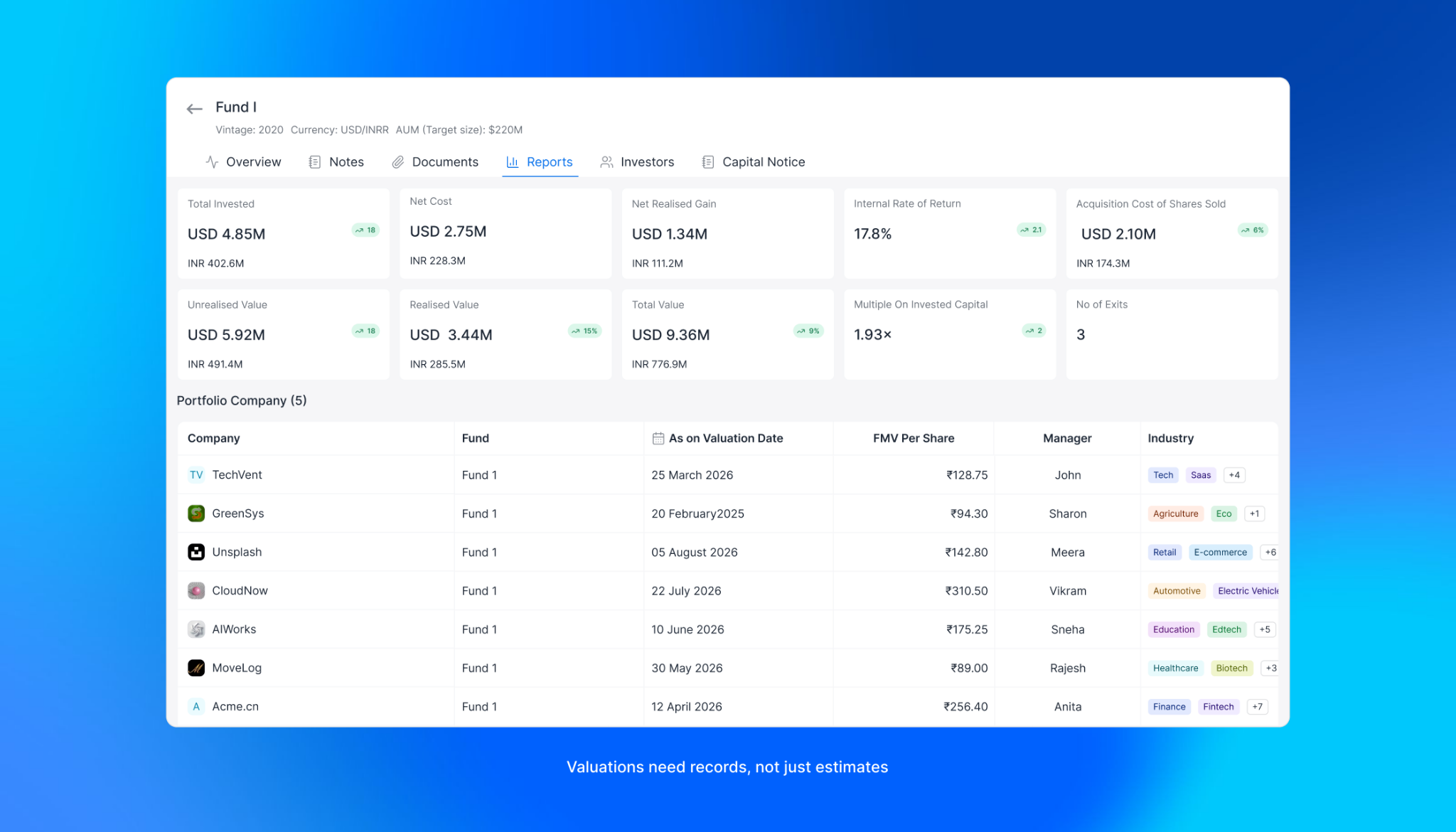
This distinction is important. Taghash does not replace valuation professionals or guarantee valuation outcomes. It helps keep the records, documents and workflow context organized so valuation reviews can happen with cleaner inputs and better traceability.
For VC and PE firms, that means fewer gaps between portfolio updates, investment records, valuation trails and fund reporting outputs.
Fund reporting often becomes difficult because the data behind the report is scattered.
A quarterly report may require capital activity, NAV, distributions, portfolio performance, valuation movements, realized value, unrealized value, ownership updates and narrative context. If every input lives in a separate spreadsheet or document, the reporting process becomes manual and error-prone.
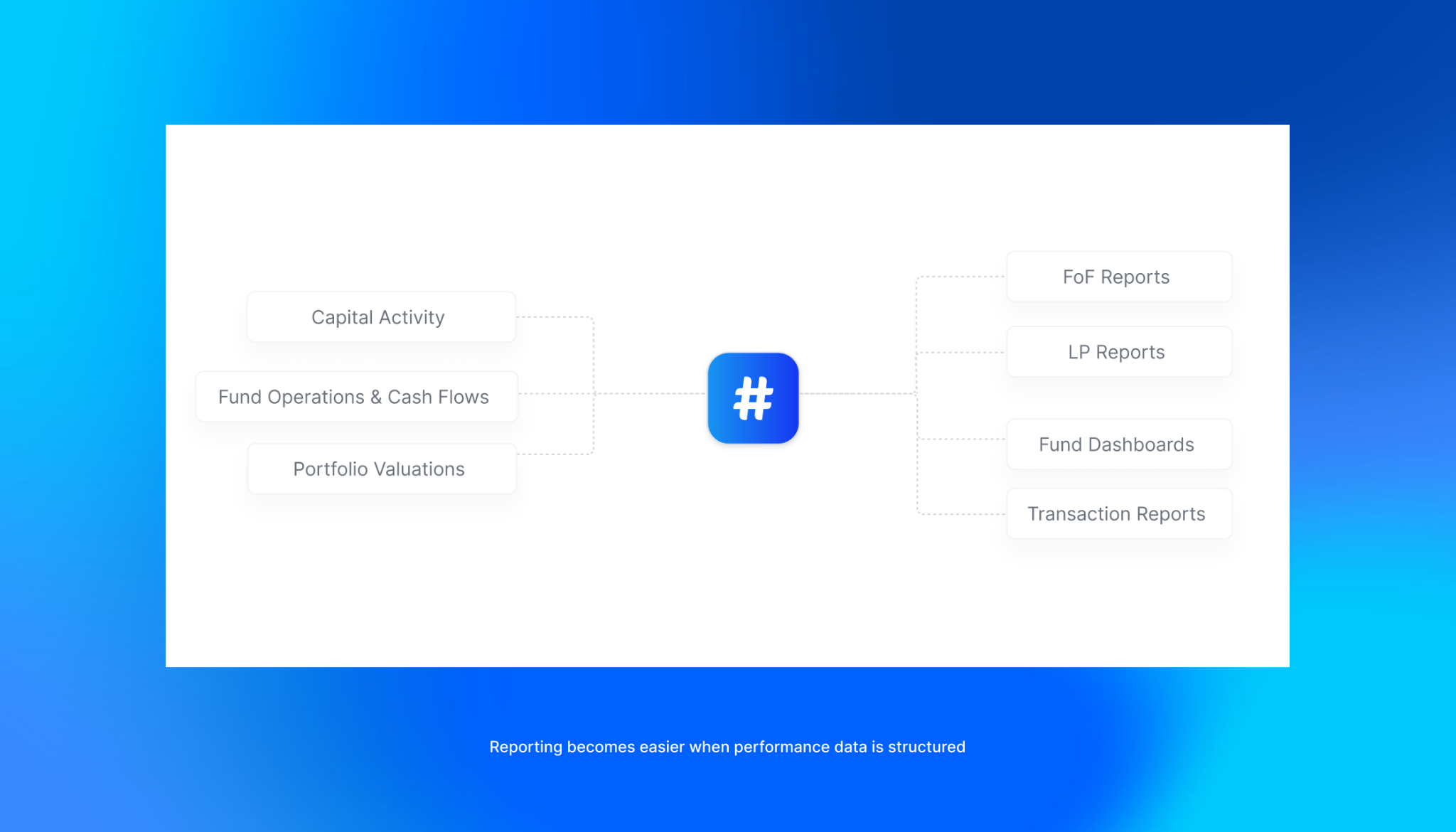
Taghash’s Fund Management module includes approved positioning around custom reports, fund performance across levels, end-to-end capital activity, investment value and ownership and multi-fund, multi-currency operations.
This helps teams prepare reports from structured records instead of manually assembling each output from disconnected sources.
Taghash’s approved Fund Management metrics also include 50+ fund and portfolio metrics tracked, 83% less time spent preparing reports and a 360-degree view across funds, SPVs and portfolios. These metrics should remain tied to the Fund Management page context.
A fund performance system should help teams do more than generate reports. It should help them understand what changed, where value is moving and what needs attention.
With connected fund and portfolio records, VC and PE teams can review:
This gives investment, finance, operations and investor relations teams a shared base for decisions. It also improves continuity between portfolio reviews, management meetings, LP reporting and audit preparation.
AI becomes more useful when fund performance data is structured and permissioned.
Taghash MCP gives AI tools secure, governed access to approved data already managed in Taghash so fund teams can query data in natural language, generate outputs and move work forward with greater continuity and control. In portfolio workflows, AI tools can work with approved portfolio company records, financial and operating metrics, documents, ownership details and valuation history to prepare summaries, compare companies, support valuation reviews and respond to internal data requests.
This AI access should remain governed. It works with approved Taghash context, follows existing permissions and requires user review for outputs and actions.
For fund performance management, that means AI can support analysis and reporting without becoming an uncontrolled decision layer.
Learn more: How Secure AI is for VC Firms
Fund performance management is no longer only about maintaining spreadsheets at quarter-end. VC and PE firms need a connected operating layer where capital activity, portfolio value, ownership, valuations, NAV, transactions and reporting workflows stay aligned.
Taghash helps teams track investment value and ownership, manage capital activity end-to-end and maintain one view across fund performance.
The outcome is clearer visibility across funds, SPVs and portfolio companies. Teams can spend less time rebuilding records and more time understanding performance, preparing reliable reports and acting with better context.
For private capital teams, that is the smarter way to track portfolio value: structured fund data, connected workflows and performance context that carries from portfolio updates to fund reporting.
About Taghash
Taghash provides an end-to-end platform for venture funds, private equity, fund of funds and other alternative investment funds. Over the last seven years, we have served as the tech arm for top VCs, helping them manage operations across deal flow, portfolio, fund and LP management.
We also offer a suite of services like Contributor onboarding/servicing, Fund accounting, Fund administration, Compliance Management, Reporting & Portfolio management and Tax compliance.
Trusted by leading fund managers like Blume Ventures, Kalaari Capital and A91 Partners, we enable our clients to achieve greater success. Click here to book a demo.
View all

For AIFs subject to the annual PPM compliance audit, 30 September 2026 is the reporting deadline for FY 2025-26. This guide covers audit applicability, exemptions and the key considerations for fund teams preparing for the deadline.
LP consent involves more than collecting votes. This blog explains how AIF teams can manage investor selection, voting rules, weighted approvals, reminders and audit-ready records through a structured LP consent workflow.
IFSCA has introduced the Fund Management (Second Amendment) Regulations, 2026, bringing changes across Venture Capital, Restricted and Retail schemes. This blog covers the key updates to pre-close deployment, NAV and portfolio reporting, FME contributions, distribution rights, scheme documentation and governance.