


VC decisions depend on context across the whole fund. But when key fund data is scattered, teams lose the thread. This blog explains how centralized fund data helps VC teams keep continuity, see the full picture, and make informed decisions across the fund lifecycle.

Tanupreet Kaur
Jun 17, 2026
-
7
min to read
VC decisions depend on context.
A new deal is not judged only by a pitch deck. A follow-on decision is not based on one portfolio update. An LP response should not depend on someone searching through old emails. A fund review cannot rely on disconnected spreadsheets, stale reports and scattered documents.
Yet that is how many venture capital teams still operate. Deal notes sit in inboxes. Portfolio MIS files live in folders. LP records are maintained separately. Fund performance data is updated in spreadsheets. Approvals, tasks and reporting inputs move across calls, messages and documents.
The issue is not a lack of data. The issue is that fund data is fragmented.
Taghash is built for this operating reality. It brings dealflow, relationship intelligence, portfolio management, fund operations, LP reporting, compliance work, documents, data and workflow context into one connected workspace for private capital teams.
Venture capital teams make decisions across multiple workflows.
An investment team may need deal source, founder history, diligence notes, deck versions, meeting activity and IC feedback. A portfolio team may need MIS updates, financial metrics, ownership records, valuation history and risk indicators. Fund operations may need capital activity, transaction records, NAV movements and reporting outputs. Investor relations may need LP records, commitments, capital account history, documents and communication history.
When each workflow runs in a separate system, the team loses continuity.
A partner may not know the latest portfolio update before a review call. An analyst may rebuild a company summary because prior notes were not connected to the deal record. Investor relations may ask finance for information already available elsewhere. Operations may need to reconcile records across multiple versions of the same file.
This creates more than inefficiency. It weakens the quality of decisions because teams act with partial context.
Centralized fund data does not mean putting every file into one folder. It means creating a connected operating layer where records, documents, workflows and context stay linked across the fund lifecycle.
For VC firms, this includes:
Taghash’s core narrative is built around this need: private capital teams work across fragmented tools, documents, emails, spreadsheets, calls and disconnected workflows. Taghash connects the operating layer behind fund work so teams can track what is happening, understand what needs attention and act with better context.
Dealflow decisions move quickly. A team may review dozens of companies in a week, revisit older opportunities, compare similar businesses or prepare for a partner meeting with limited time.
If deal data is scattered, the team spends too much effort reconstructing context:
Who introduced the founder?
What did we discuss in the last meeting?
Which deck version is current?
What stage is the deal in?
What open questions remain?
Who owns the next step?
Centralized deal data helps the investment team maintain pipeline discipline. Deal records can carry sourcing context, founder conversations, pitch decks, notes, reminders, documents and activity history in one place.
This gives the team a more reliable view of each opportunity. It also helps avoid lost deals, duplicated work and decisions made without the latest context.
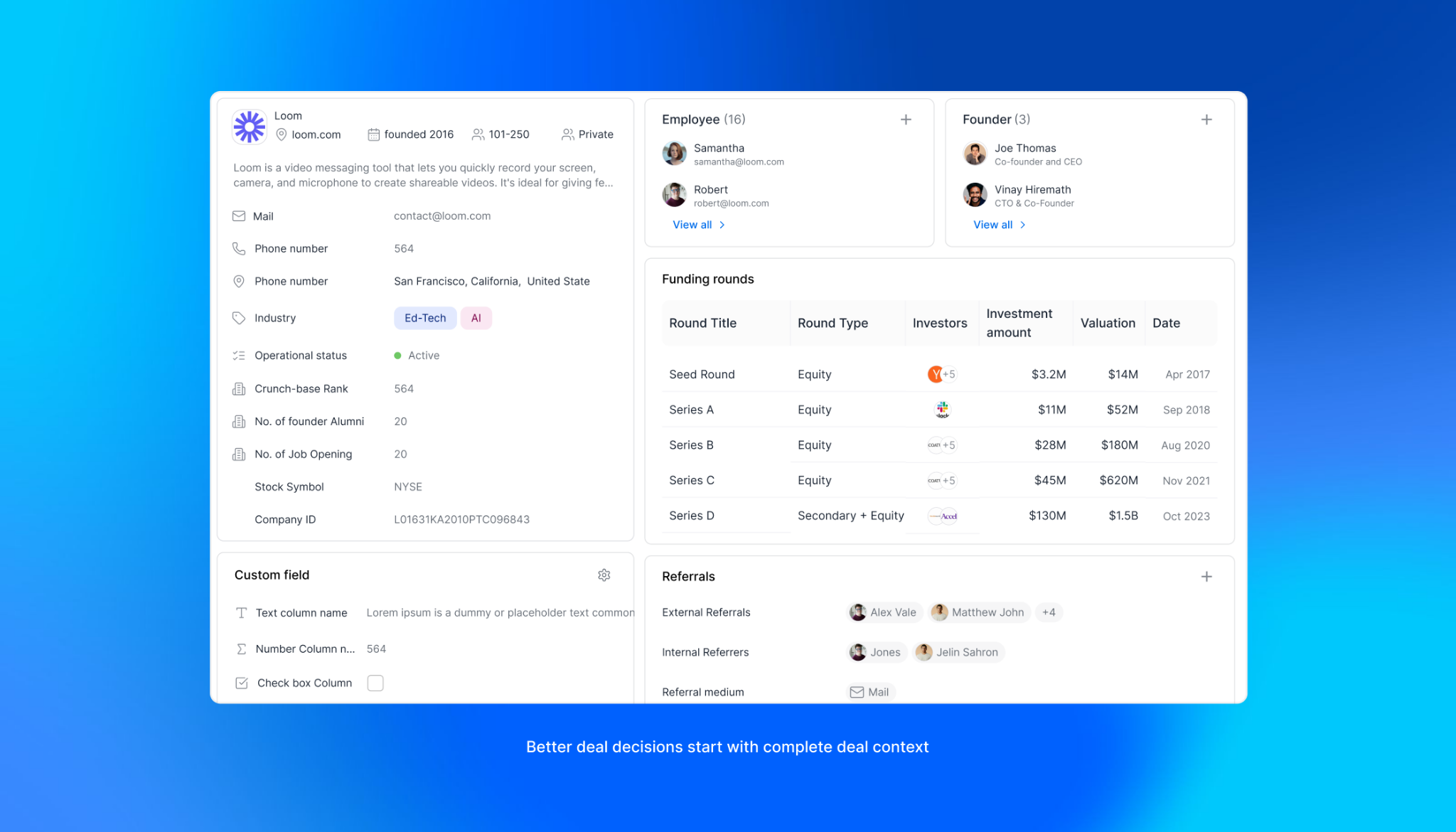
Portfolio management depends on timely information. A fund team needs to understand how companies are performing, which metrics are changing, where risk may be emerging and where support may be needed.
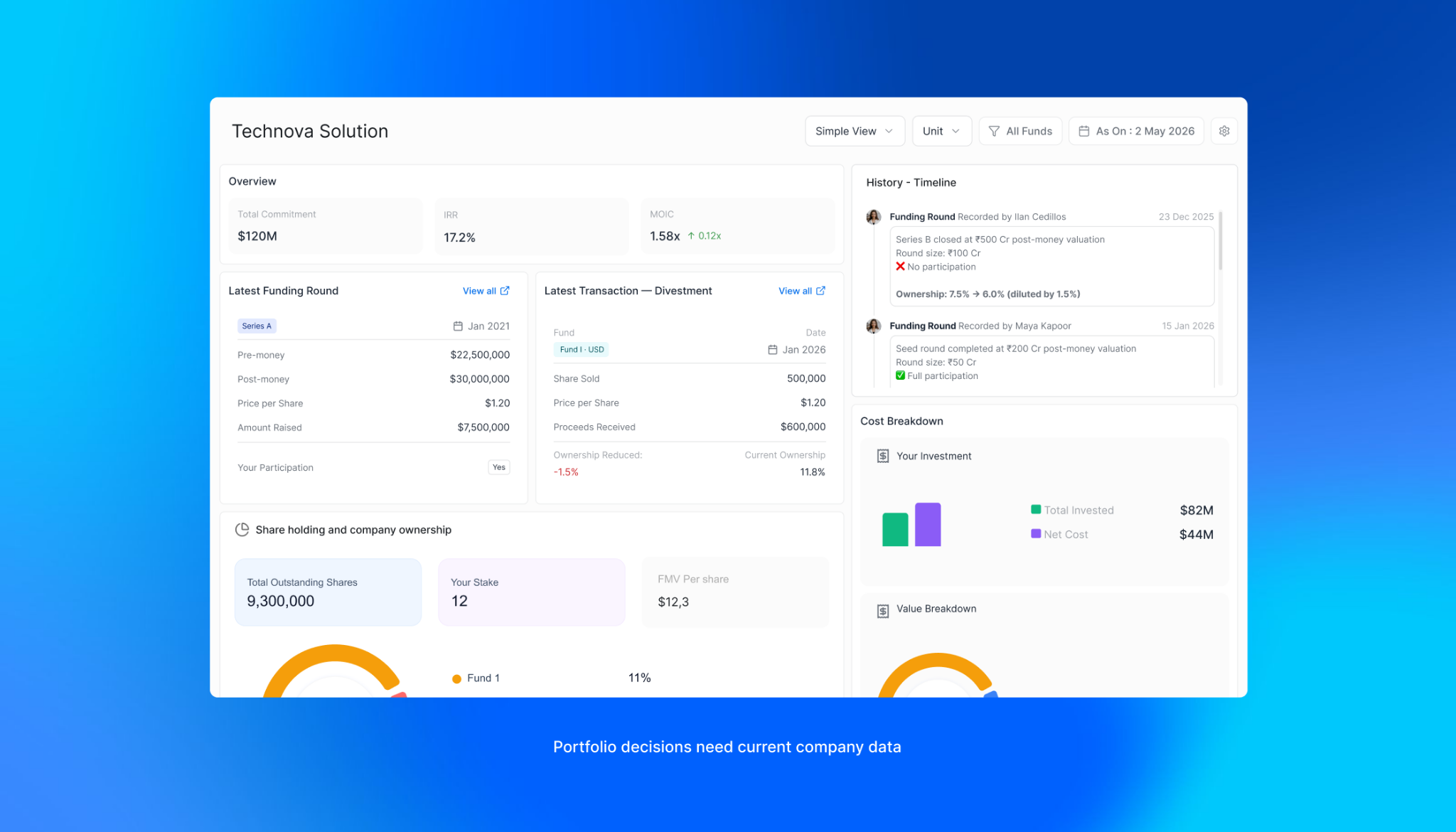
Without centralized portfolio data, updates often remain trapped in MIS files, emails, board decks or partner notes. That makes it harder to compare companies, identify trends and prepare internal or LP-facing updates.
Taghash’s Portfolio Management positioning focuses on tracking company updates, financials, ownership, documents and portfolio metrics in one connected workspace. This helps teams monitor performance, identify risks and act earlier with better visibility.
Centralized portfolio data supports decisions such as:
The goal is not only reporting. It is operating visibility across every portfolio company.
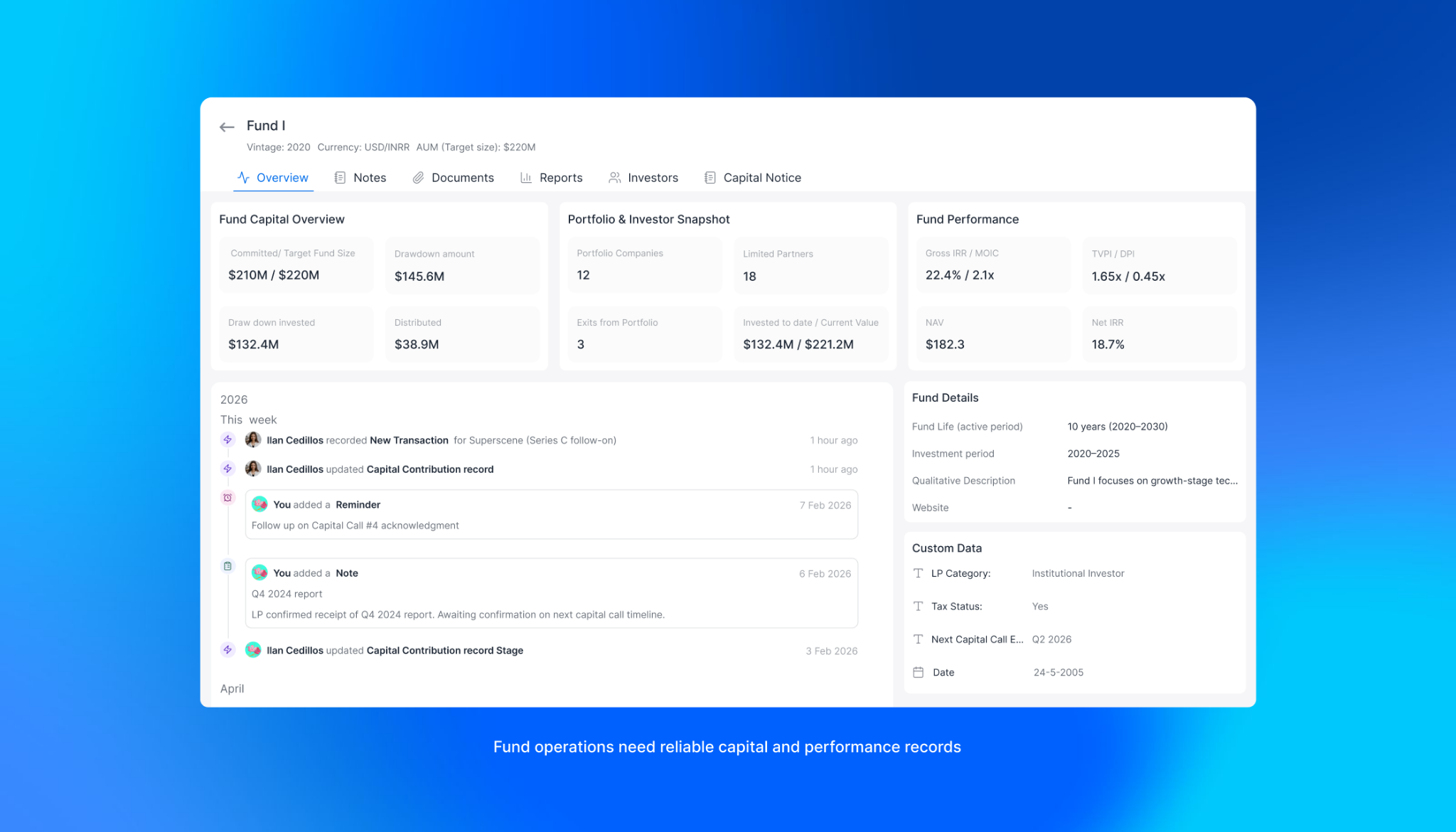
Fund decisions are also operational. Teams need to track how capital moves, how investments are performing, how records connect across funds or SPVs and what information is ready for reporting.
If fund data is maintained across disconnected spreadsheets, reports and documents, even simple questions become time-consuming:
What is the latest NAV?
Which investments changed in value?
How much capital has been called?
Which distributions have been made?
What is the current exposure across funds, SPVs and portfolio companies?
Which records support the latest report?
Taghash’s Fund Management module is positioned around tracking capital activity, fund performance, investor records, valuations, transactions and reporting across funds, SPVs and portfolios.
Centralized fund data helps operations, finance and investment teams work from cleaner records. It supports reporting discipline, internal reviews and faster access to the data behind fund-level decisions.
Investor relations teams need accurate, accessible and permissioned LP data. When investor records, commitments, documents, communications and reporting outputs are scattered, responsiveness becomes harder.
An LP query may require context from finance, operations and investor relations. A capital account question may depend on contribution history, distribution records, NAV updates and prior communications. A document request may need the latest approved report, notice or statement.
Taghash’s LP Management positioning focuses on unifying onboarding, data rooms and reporting, while helping teams manage LP records, capital activity and investor relations workflows.
Centralized LP data helps teams respond with better context and less back and forth. It also supports a more consistent investor experience because records, documents and reporting workflows are connected.
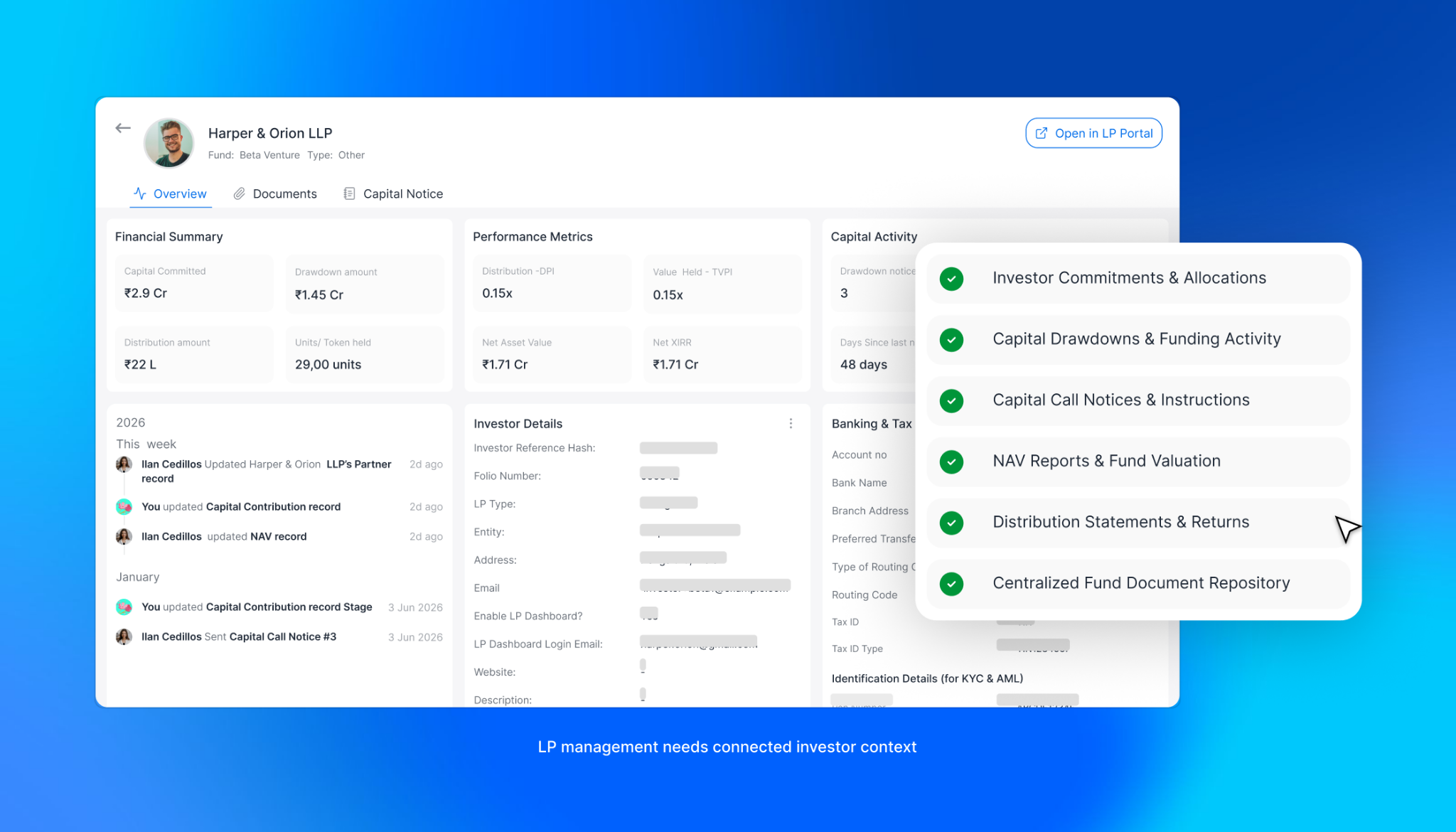
The strongest benefit of centralized fund data is continuity.
A deal does not stop being relevant after investment. The original thesis, diligence notes, ownership details, documents and decision history should carry into portfolio management. Portfolio updates should connect to fund reporting. Fund performance should connect to LP communications. Investor questions should connect back to approved records, documents and reporting context.
When context is carried forward, teams do not have to rebuild the same view again and again.
This is central to the Taghash platform idea: run your fund as one. Taghash connects people, processes and priorities in one shared workspace, helping private capital teams manage the full fund lifecycle with greater visibility, control and continuity.
AI can help VC firms analyze documents, prepare summaries, draft reports and answer fund data questions. But AI needs clean, approved and permissioned context to be useful.
When data is fragmented, AI outputs can be incomplete because the relevant context is spread across systems. When fund data is centralized and structured, AI can work with better inputs.
Taghash MCP gives AI tools secure, governed access to approved Taghash data and workflow context. Access follows existing Taghash permissions, uses explicit authorization and keeps outputs subject to user review.
This matters for VC firms because AI should support fund workflows without creating uncontrolled access to sensitive information.
A team can use AI to help prepare deal summaries, portfolio analysis, fund reports or investor updates, while keeping the underlying data governed inside the Taghash operating layer.
VC firms do not need more disconnected dashboards. They need a connected view of fund work.
Centralized fund data helps teams answer better questions:
Which deals need attention now?
Which portfolio companies are showing early risk signals?
Which capital activity has changed this quarter?
Which LP records need follow-up?
Which documents support the latest report?
Which decisions are waiting on approvals, updates or missing context?
Taghash helps bring those answers closer to the workflows where decisions happen. By connecting dealflow, portfolio management, fund operations, LP management, documents, data, tasks and approvals, the platform helps VC teams operate with better context.
Better decisions do not come from data sitting somewhere in the background. They come from fund data that is structured, connected, current and available to the right people at the right time.
That is the role of centralized fund data in venture capital. It gives teams the visibility and continuity they need to run the fund with greater control.
Taghash provides an end-to-end platform for venture funds, private equity, fund of funds and other alternative investment funds. Over the last seven years, we have served as the tech arm for top VCs, helping them manage operations across deal flow, portfolio, fund and LP management.
We also offer a suite of services like Contributor onboarding/servicing, Fund accounting, Fund administration, Compliance Management, Reporting & Portfolio management and Tax compliance.
Trusted by leading fund managers like Blume Ventures, Kalaari Capital and A91 Partners, we enable our clients to achieve greater success. Click here to book a demo.
View all

For AIFs subject to the annual PPM compliance audit, 30 September 2026 is the reporting deadline for FY 2025-26. This guide covers audit applicability, exemptions and the key considerations for fund teams preparing for the deadline.
LP consent involves more than collecting votes. This blog explains how AIF teams can manage investor selection, voting rules, weighted approvals, reminders and audit-ready records through a structured LP consent workflow.
IFSCA has introduced the Fund Management (Second Amendment) Regulations, 2026, bringing changes across Venture Capital, Restricted and Retail schemes. This blog covers the key updates to pre-close deployment, NAV and portfolio reporting, FME contributions, distribution rights, scheme documentation and governance.