


This Taghash release helps fund teams reduce repeat work across dealflow and portfolio workflows. The update brings improved deal merging, reusable MIS templates and portfolio performance comparison to keep records cleaner, reporting setup faster and reviews more structured.

Tanupreet Kaur
Jul 1, 2026
-
3
min to read
As funds scale, deal records become more complex. Portfolio reporting takes more time. Performance reviews need better context.
This release helps fund teams:
We have added improvements across dealflow and portfolio workflows. These updates help teams keep records cleaner, set up recurring reports faster, and review portfolio performance with more context.
Duplicate or similar deals can split important context across different records.
For example:
Taghash already supports deal merging. This helps teams bring information from two similar or duplicate deals into one central record.
We have now improved the merge flow.
Teams can search for both deals during the merge stage itself. They can also select both records from there, without having to first find them in the pipeline.
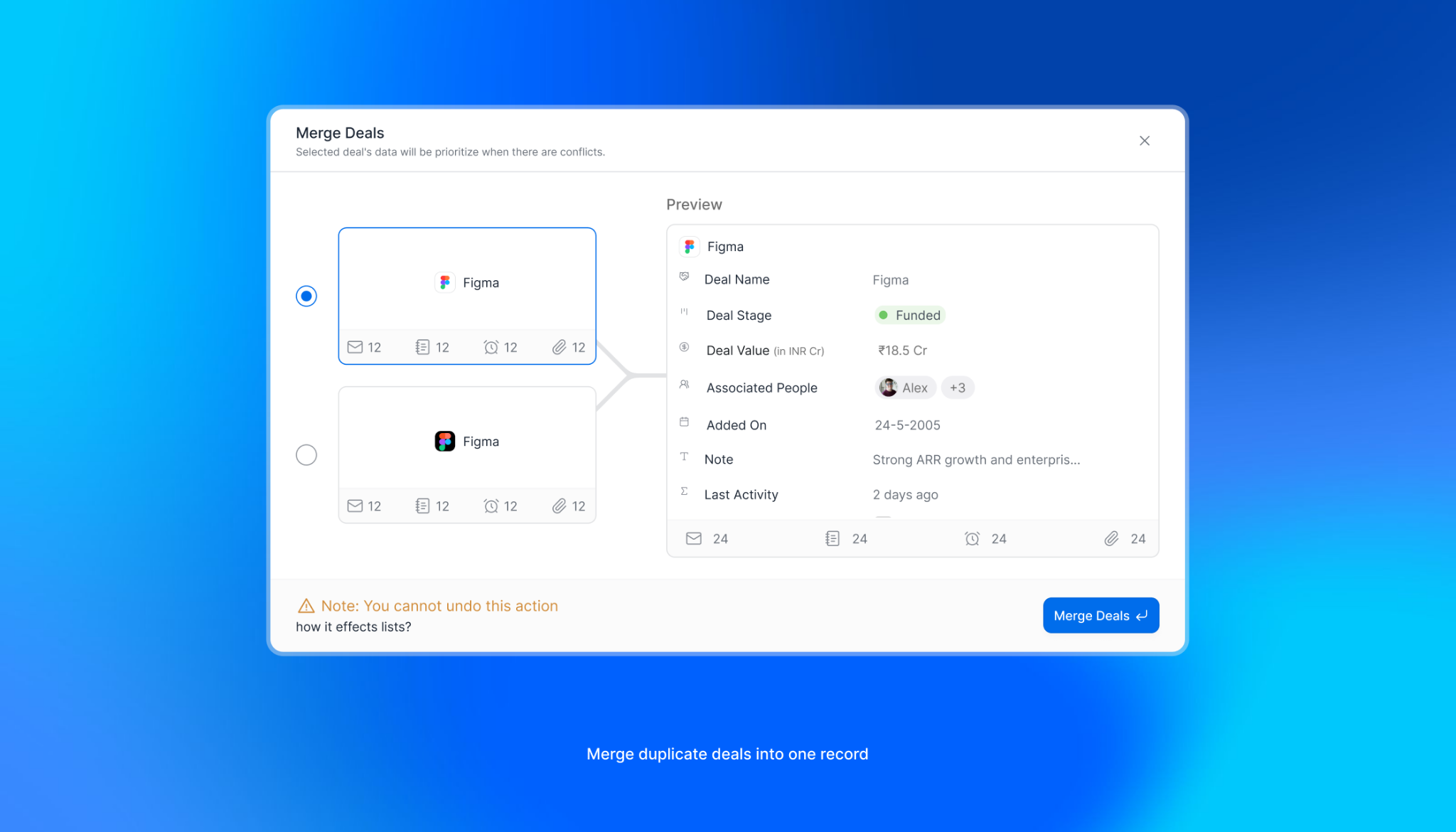
This makes the process easier to manage across larger pipelines. It also keeps deal context in one place, helping investment teams continue review, diligence, and follow-up from a more complete record.
Portfolio companies often share similar reporting needs. This is especially common when companies operate in the same sector, industry, or business model.
Until now, teams had to recreate MIS sheets, reports, and dashboard charts for each company. This added repeat setup work, even when the reporting structure was mostly the same.
MIS Templates now let teams save common MIS structures and reuse them across portfolio companies with a simple click.
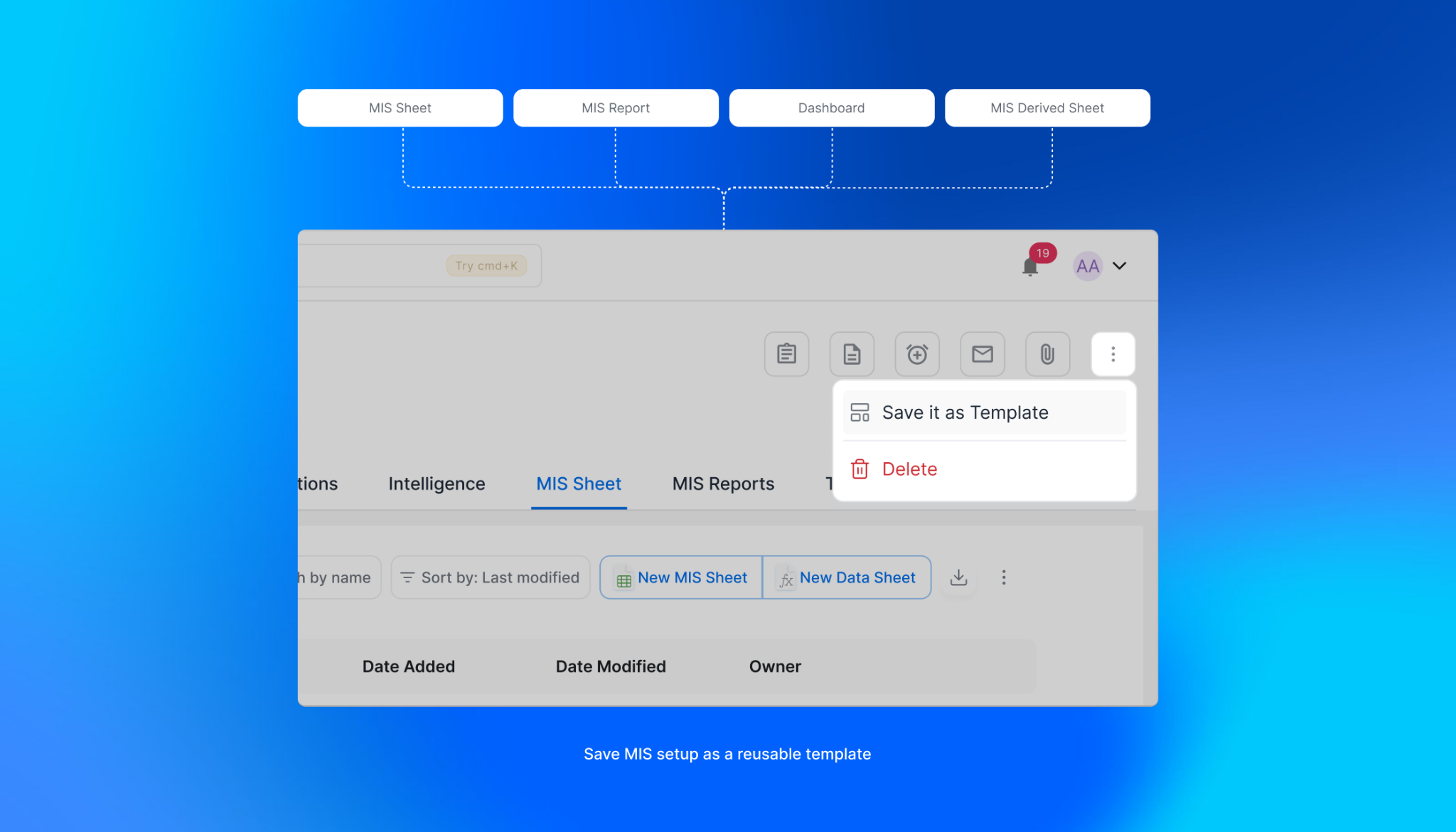
Teams can save and reuse:
Instead of rebuilding the same sheets and charts each time, teams can start with a saved structure and adjust it where needed.
This reduces setup time and helps portfolio teams get to review faster.
Portfolio reviews often require comparisons across several companies.
Teams may need to compare:
When this work is done manually, it can be difficult to keep the view consistent.
Portfolio Monitoring now gives teams one place to compare companies and metrics. Teams can choose the companies they want to review, select the metrics that matter, and compare performance across periods such as QoQ, YoY, Q-YoY, QTD, and YTD.
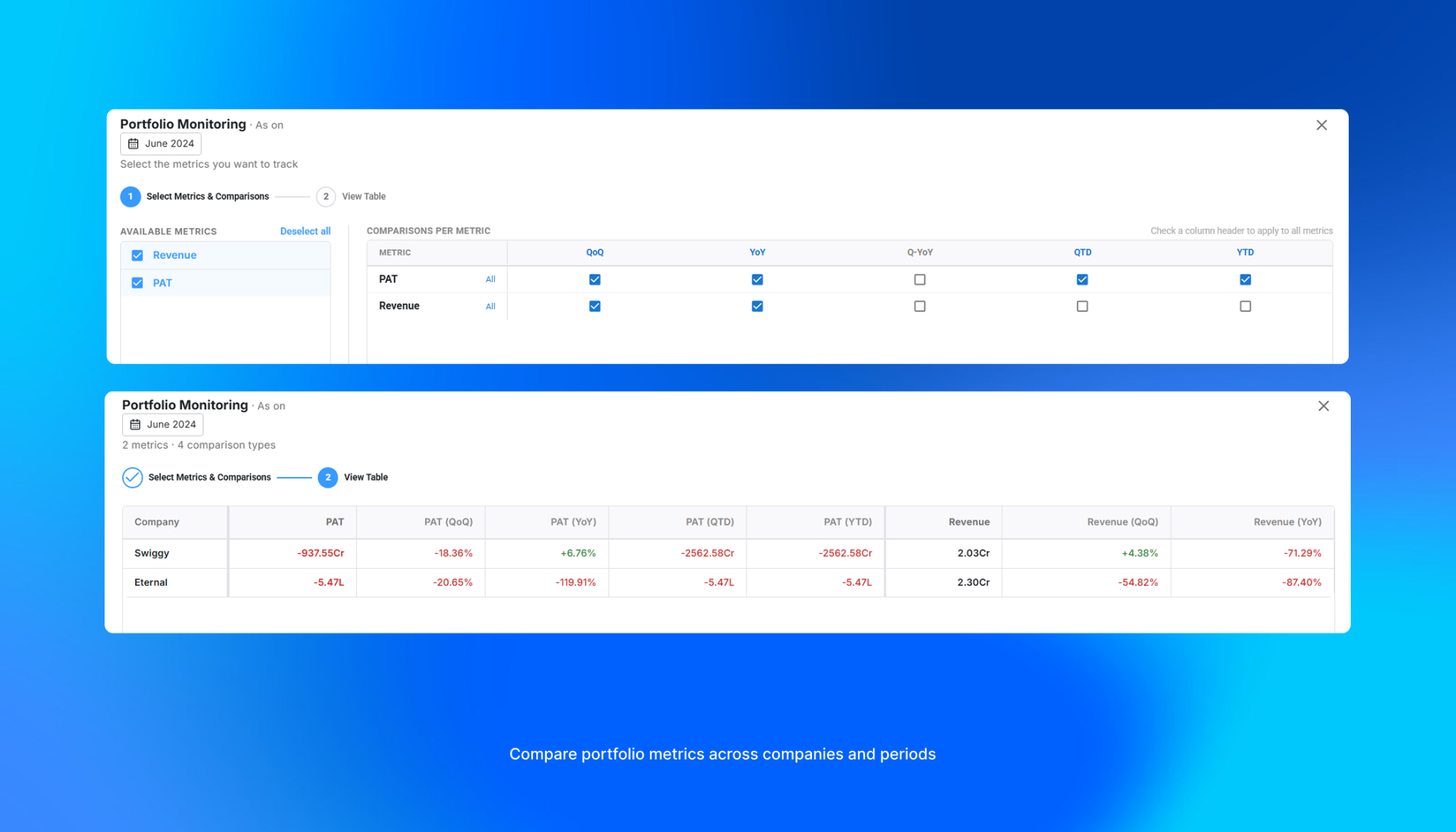
The comparison table brings selected information into one view. Teams can also download it as a CSV file for further review, reporting prep, or internal analysis.
This helps portfolio teams monitor performance, compare trends, and prepare review outputs without rebuilding comparison sheets manually.
Every update we ship is built to reduce manual work, improve workflow continuity, and support dependable fund operations.
With this release, Taghash helps teams keep deal records unified, standardize recurring MIS workflows, and review portfolio performance with more structure.
Log in, explore the latest updates, and tell us what you would like us to improve next.
— The Taghash Team
View all

For AIFs subject to the annual PPM compliance audit, 30 September 2026 is the reporting deadline for FY 2025-26. This guide covers audit applicability, exemptions and the key considerations for fund teams preparing for the deadline.
LP consent involves more than collecting votes. This blog explains how AIF teams can manage investor selection, voting rules, weighted approvals, reminders and audit-ready records through a structured LP consent workflow.
IFSCA has introduced the Fund Management (Second Amendment) Regulations, 2026, bringing changes across Venture Capital, Restricted and Retail schemes. This blog covers the key updates to pre-close deployment, NAV and portfolio reporting, FME contributions, distribution rights, scheme documentation and governance.