


Fund of Funds teams need more than a fund-level allocation view. This blog explains how look-through visibility helps teams track underlying funds, indirect holdings, exposure, NAV changes and performance across every layer of a complex FoF portfolio.

Tanupreet Kaur
Jul 6, 2026
-
7
min to read

Fund of Funds teams invest across layers.
One underlying fund can hold dozens of portfolio companies. Those companies can span sectors, stages, geographies, managers and valuation dates. Capital activity comes through commitments, drawdowns, distributions, NAV updates and valuation changes.
By the time this data reaches the FoF team, it may be spread across reports, spreadsheets, emails, PDFs and review files.
That creates a problem. A team may know how much capital is allocated to each fund, but still lack a clear answer to a basic operating question:
What is held beneath each fund position?
For a Fund of Funds, the first layer is only the starting point.
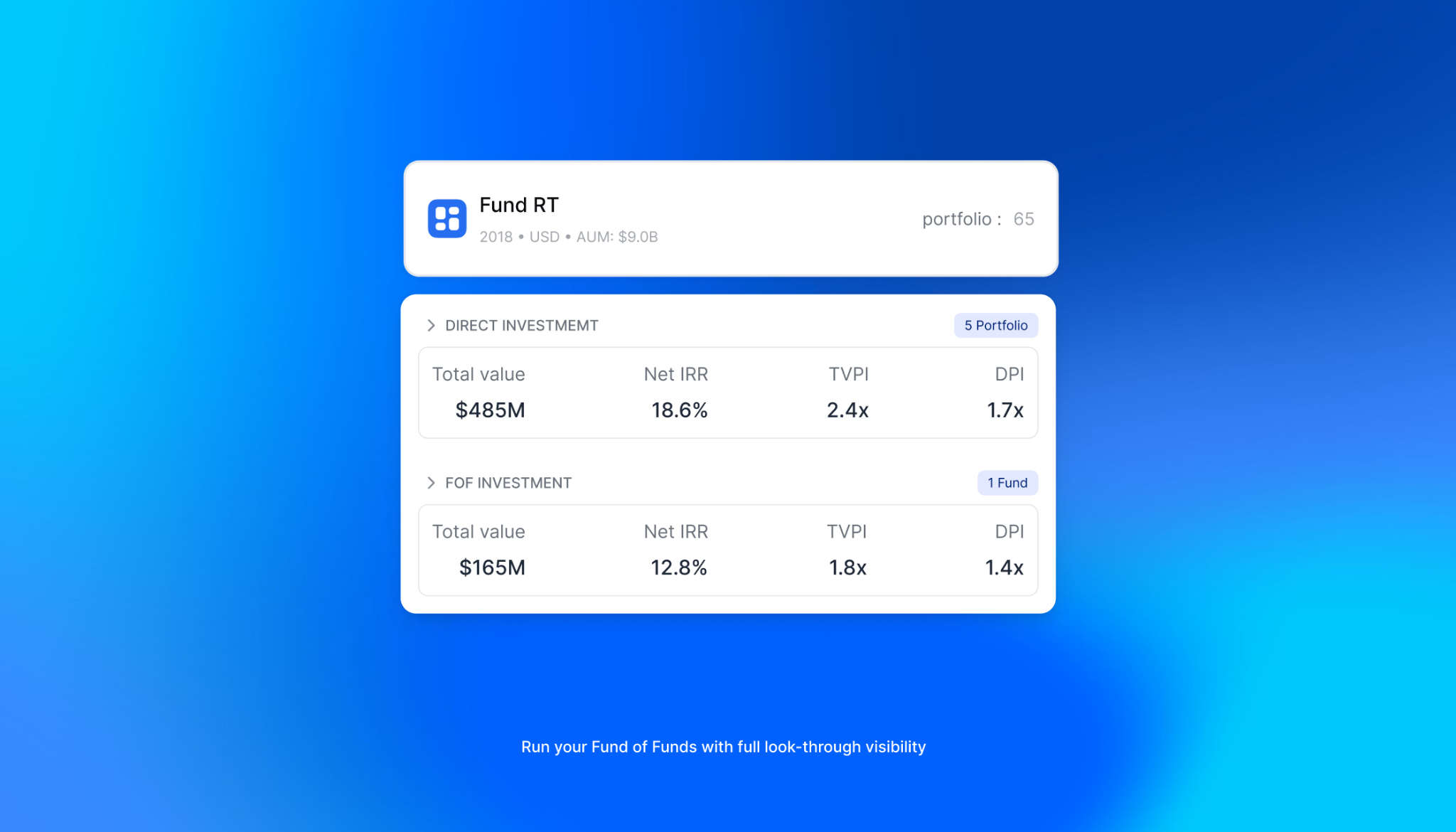
A fund-level view is useful for tracking allocations into underlying funds. For portfolio reviews, allocation decisions and investor updates, teams often need a deeper view.
FoF teams need to answer questions such as:
Which portfolio companies are held indirectly across underlying funds?
Where is exposure concentrated by sector, stage, geography or manager?
What drove NAV changes across funds and portfolio layers?
Which distributions, valuation changes or capital activity affected performance?
Where do direct investments and indirect holdings overlap?
Which parts of the portfolio need attention before the next internal review or investor update?
When the data is fragmented, teams end up rebuilding the same views again. Reports are reconciled by hand. Updates need follow-up. Exposure analysis depends on static files. Context stays with different people instead of the fund’s operating layer.
A Fund of Funds structure depends on relationships between the FoF vehicle, underlying funds, managers, portfolio companies, capital activity, performance data and investor reporting outputs.
Taghash Fund of Funds Management helps connect these layers in one workspace.
Instead of treating fund reports, holdings data and performance updates as separate records, Taghash helps teams organize the FoF around the way capital is allocated, tracked and reviewed.
The value goes beyond reporting. Teams get a clearer operating view of the full fund structure.
Taghash helps teams track underlying funds, direct investments, indirect portfolio companies, holdings, exposure, allocation, concentration, valuation changes and portfolio composition within one FoF view.
That gives fund teams a cleaner way to review what they hold, where exposure is concentrated and where performance is changing.
FoF teams need to understand holdings beyond headline fund positions.
With Taghash, teams can analyze holdings across underlying funds, direct investments and indirect portfolio companies. This helps create a more complete portfolio view and reduces the need to rebuild holdings analysis before every review.
A connected holdings view helps answer practical questions:
Which companies appear across more than one underlying fund?
Where is the FoF exposed by sector, stage or geography?
How is allocation changing as new investments, follow-ons, exits or valuation updates come in?
Which managers or schemes are contributing most to current exposure?
This gives teams clearer inputs for internal reviews and investor communication.
Performance in a Fund of Funds structure comes from many records. NAV updates, capital calls, distributions, returns, valuation changes and fund-level reports all affect the picture.
Taghash helps teams monitor NAV, returns, distributions, valuation changes and capital activity across underlying funds and portfolio layers.
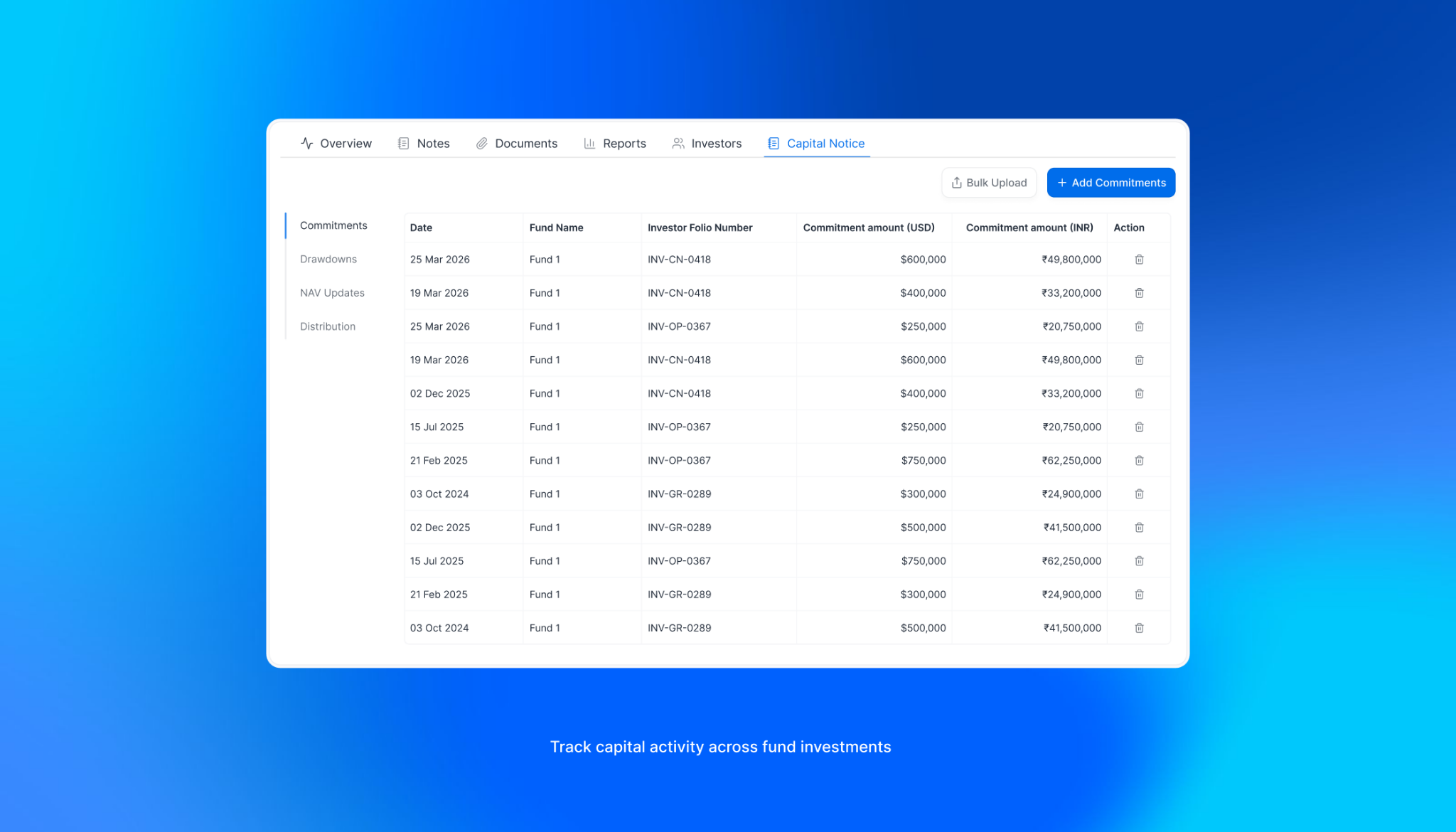
Instead of reviewing each fund in isolation, teams can see how performance is changing across the full FoF structure.
That matters when teams need to explain changes in portfolio value, compare fund performance, review manager exposure or prepare reporting packs with better context.
Exposure is easy to miss when the team reviews only the fund layer.
A fund-level allocation may look balanced. A look-through view may show concentration in a specific sector, stage, geography, manager or portfolio company.
Without structured visibility, that concentration may only show up after manual analysis.
Taghash helps teams review exposure across funds, schemes, sectors, stages, geographies, managers and portfolio companies. This supports cleaner portfolio composition review and gives teams a more disciplined view of allocation.
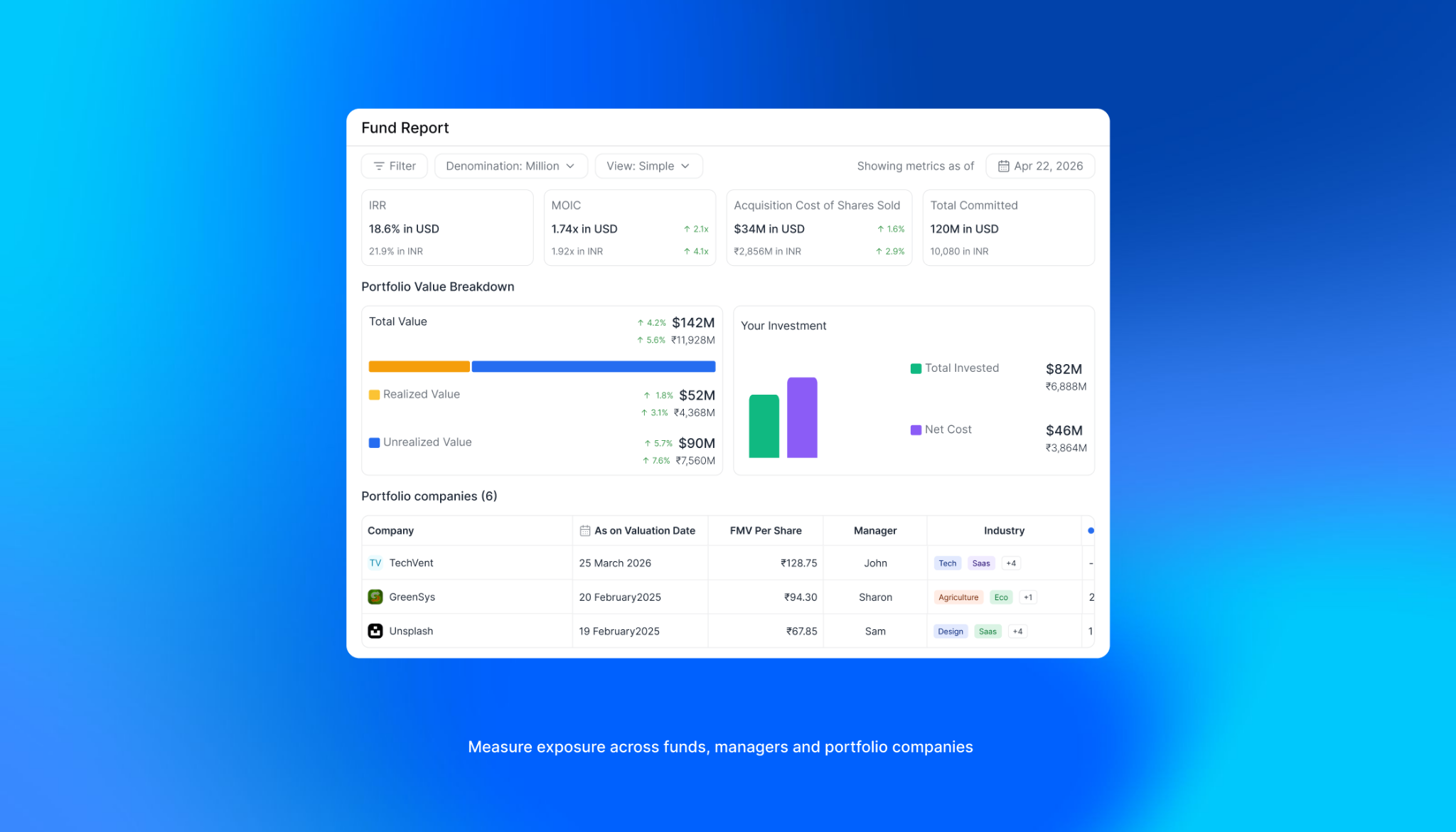
For investment teams, it improves context before new commitments.
For fund operations teams, it reduces the manual work needed to keep records current.
For investor relations teams, it supports clearer and more consistent reporting.
Many FoF reporting processes depend on static snapshots.
Once a report is prepared, the underlying data keeps changing. New NAVs come in. Distributions are recorded. Holdings change. Valuations are updated.
When reporting workflows are disconnected from operating data, teams spend time reconciling old numbers against new updates.
Taghash helps bring FoF reports closer to the records, documents, capital activity and performance context maintained in the platform.
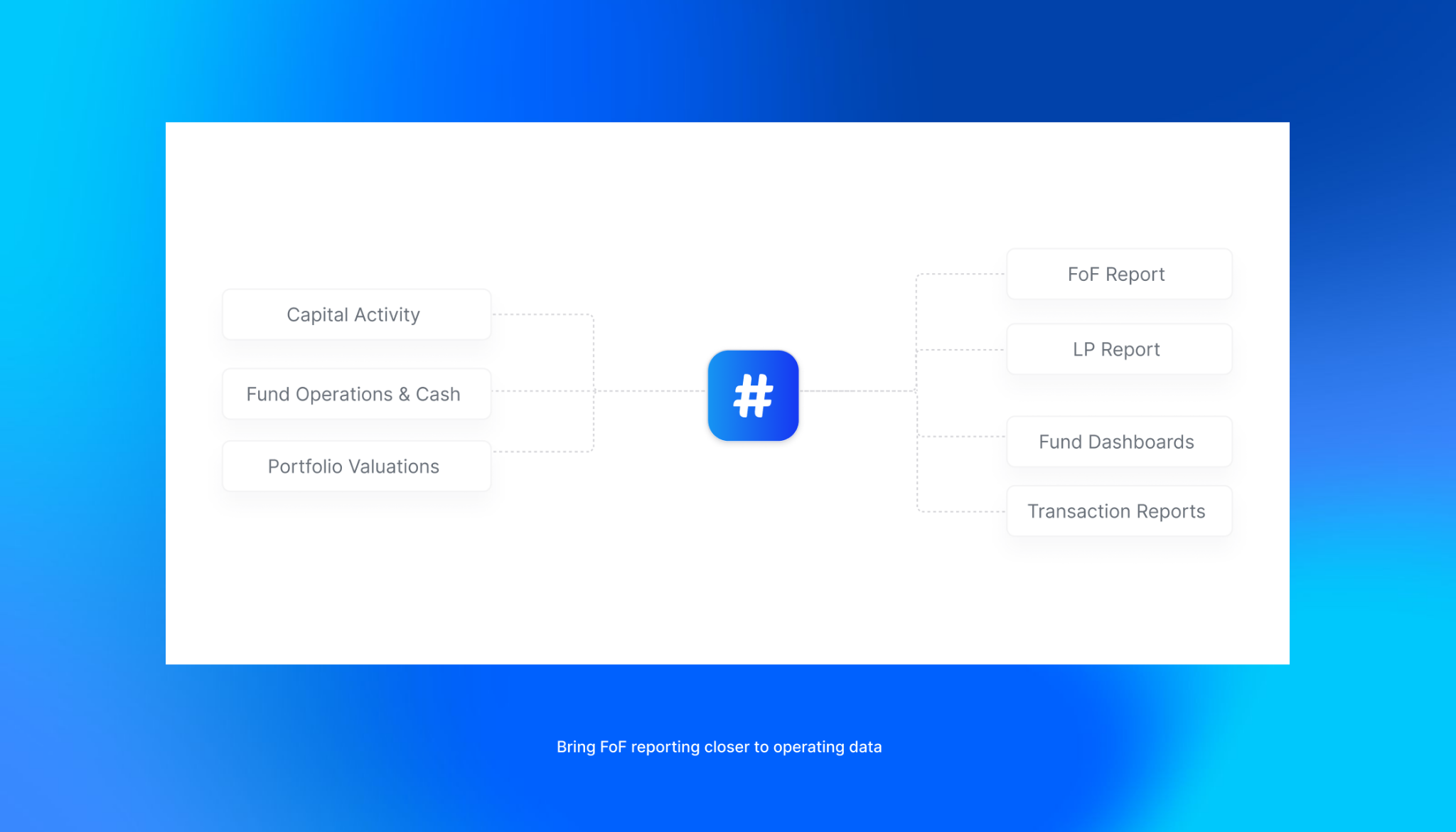
This helps fund teams spend less time rebuilding context and more time reviewing what the data means.
Look-through visibility supports day-to-day fund discipline.
With a connected FoF view, teams can:
For Fund of Funds teams, this reduces blind spots. The team can see what is held beneath each fund investment, how exposure is distributed and which capital activity or performance changes need attention.
Fund of Funds work gets harder when each layer is managed separately.
Underlying funds, portfolio companies, capital activity, performance data, reports and documents all need to connect.
Taghash Fund of Funds Management helps private capital teams work through the layers of their Fund of Funds with clearer look-through visibility.
By connecting underlying funds, holdings, exposure, allocation, capital activity and performance data in one workspace, Taghash helps FoF teams understand what they hold, how capital is allocated and how the portfolio is performing across every layer.
For teams managing complex fund portfolios, that visibility supports fewer blind spots, cleaner reviews and better context across the full Fund of Funds structure.
About Taghash
Taghash provides an end-to-end platform for venture funds, private equity, fund of funds and other alternative investment funds. Over the last seven years, we have served as the tech arm for top VCs, helping them manage operations across deal flow, portfolio, fund and LP management.
We also offer a suite of services like Contributor onboarding/servicing, Fund accounting, Fund administration, Compliance Management, Reporting & Portfolio management and Tax compliance.
Trusted by leading fund managers like Blume Ventures, Kalaari Capital and A91 Partners, we enable our clients to achieve greater success. Click here to book a demo.
View all

For AIFs subject to the annual PPM compliance audit, 30 September 2026 is the reporting deadline for FY 2025-26. This guide covers audit applicability, exemptions and the key considerations for fund teams preparing for the deadline.
LP consent involves more than collecting votes. This blog explains how AIF teams can manage investor selection, voting rules, weighted approvals, reminders and audit-ready records through a structured LP consent workflow.
IFSCA has introduced the Fund Management (Second Amendment) Regulations, 2026, bringing changes across Venture Capital, Restricted and Retail schemes. This blog covers the key updates to pre-close deployment, NAV and portfolio reporting, FME contributions, distribution rights, scheme documentation and governance.