


This Taghash product update is focused on improving operating continuity across fund workflows. The release introduces improvements designed to reduce manual effort and help fund teams manage day-to-day execution with more structure, visibility and control.

Tanupreet Kaur
May 19, 2026
-
2
min to read

This update focuses on reducing manual effort and introducing more structure to dealflow, evaluation, reporting and fund workflows.
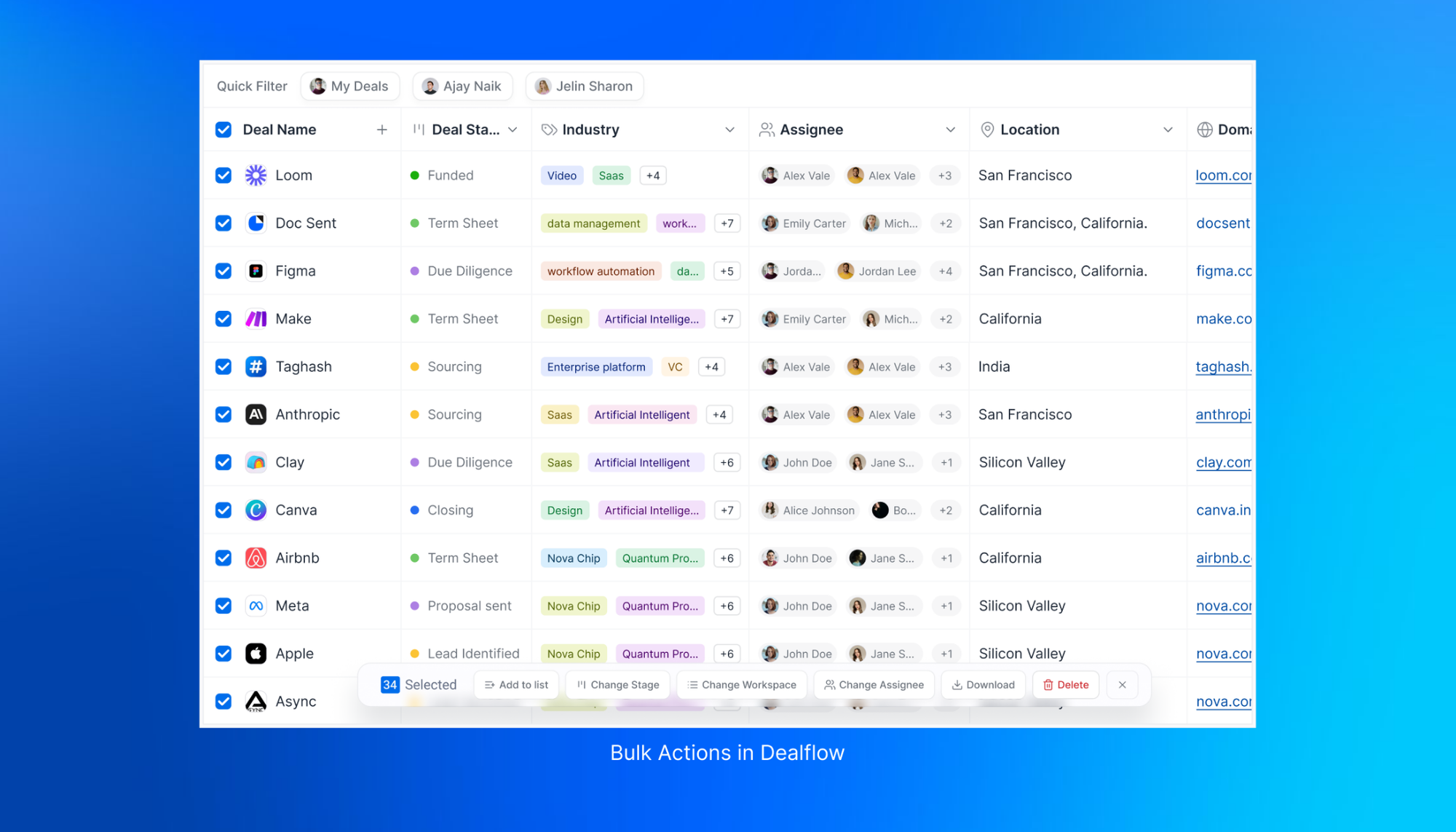
Manage high-volume pipelines more efficiently. You can now select multiple deals to update stages, assignees and workspaces or delete them in a single action.
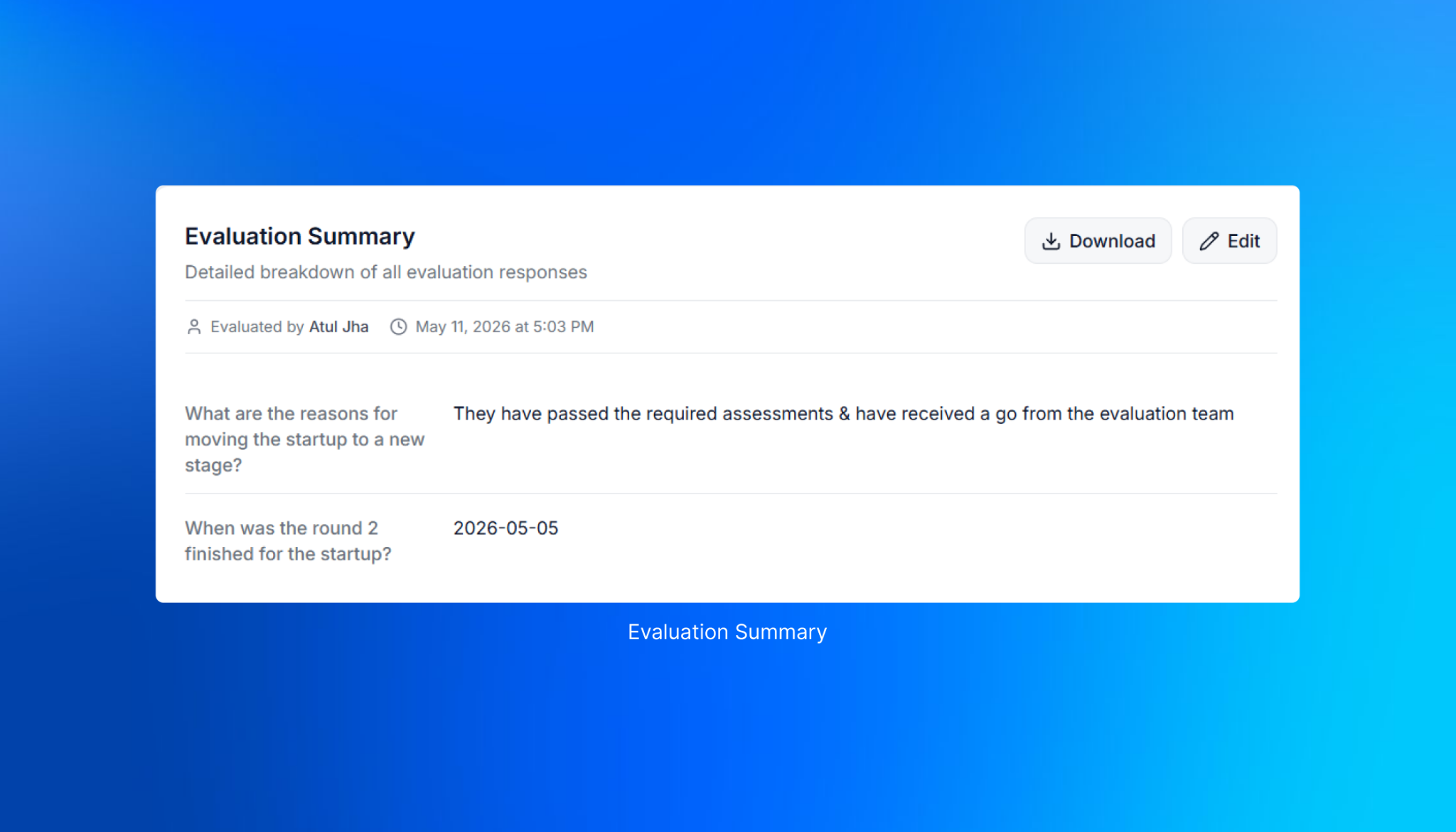
Standardize your review process for cohorts, applications and startup programs. Log stage-specific questions, answers and assessment inputs.
Charts across Dealflow and Portfolio analytics now load faster. Whether you are tracking sector breakdowns, stage-wise movement or revenue vs expenses, your dashboards are now more responsive.
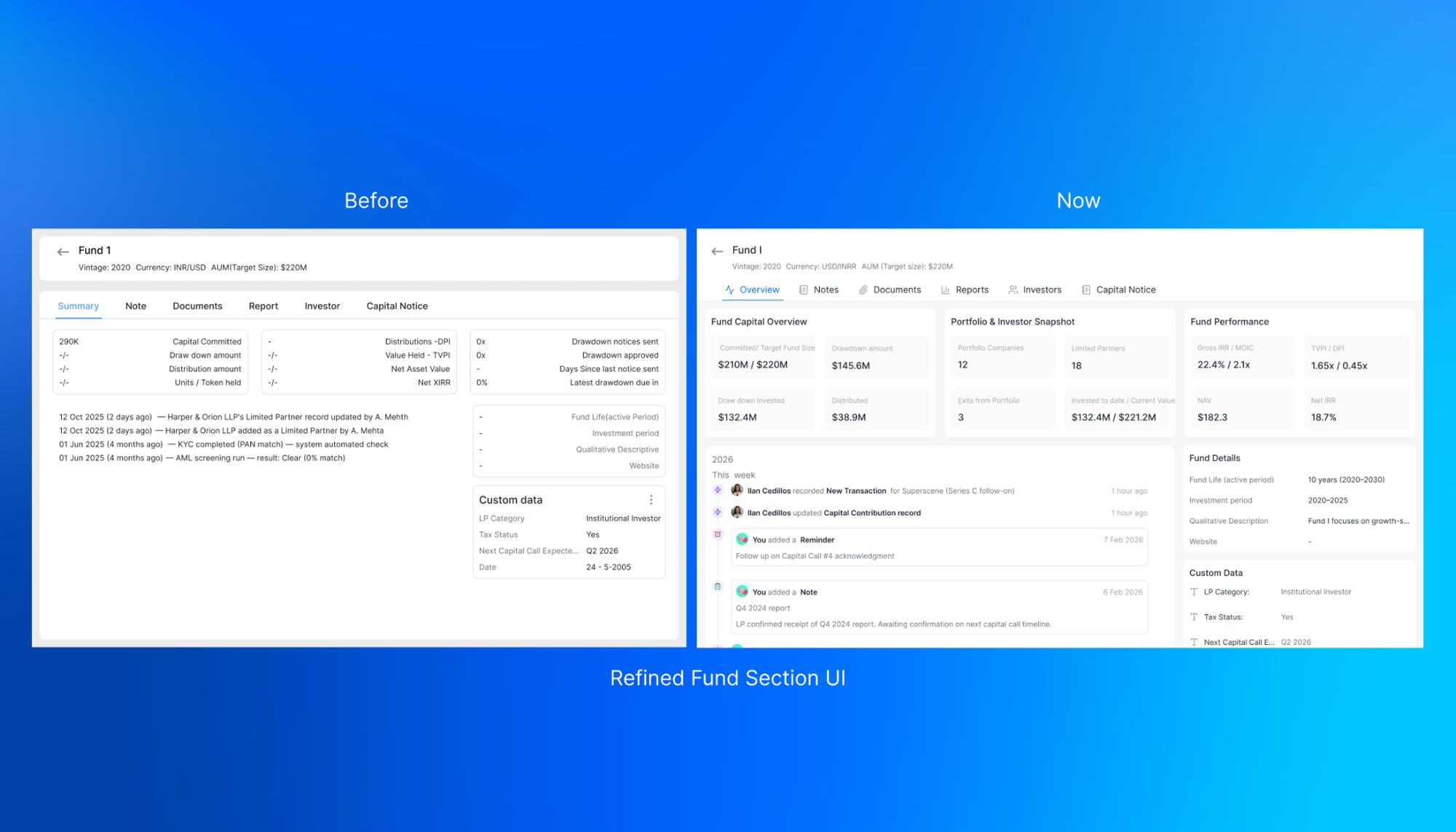
The Fund section has been redesigned for smoother navigation with a cleaner interface, compact tab labels, intuitive icons and improved sub-tab organization.
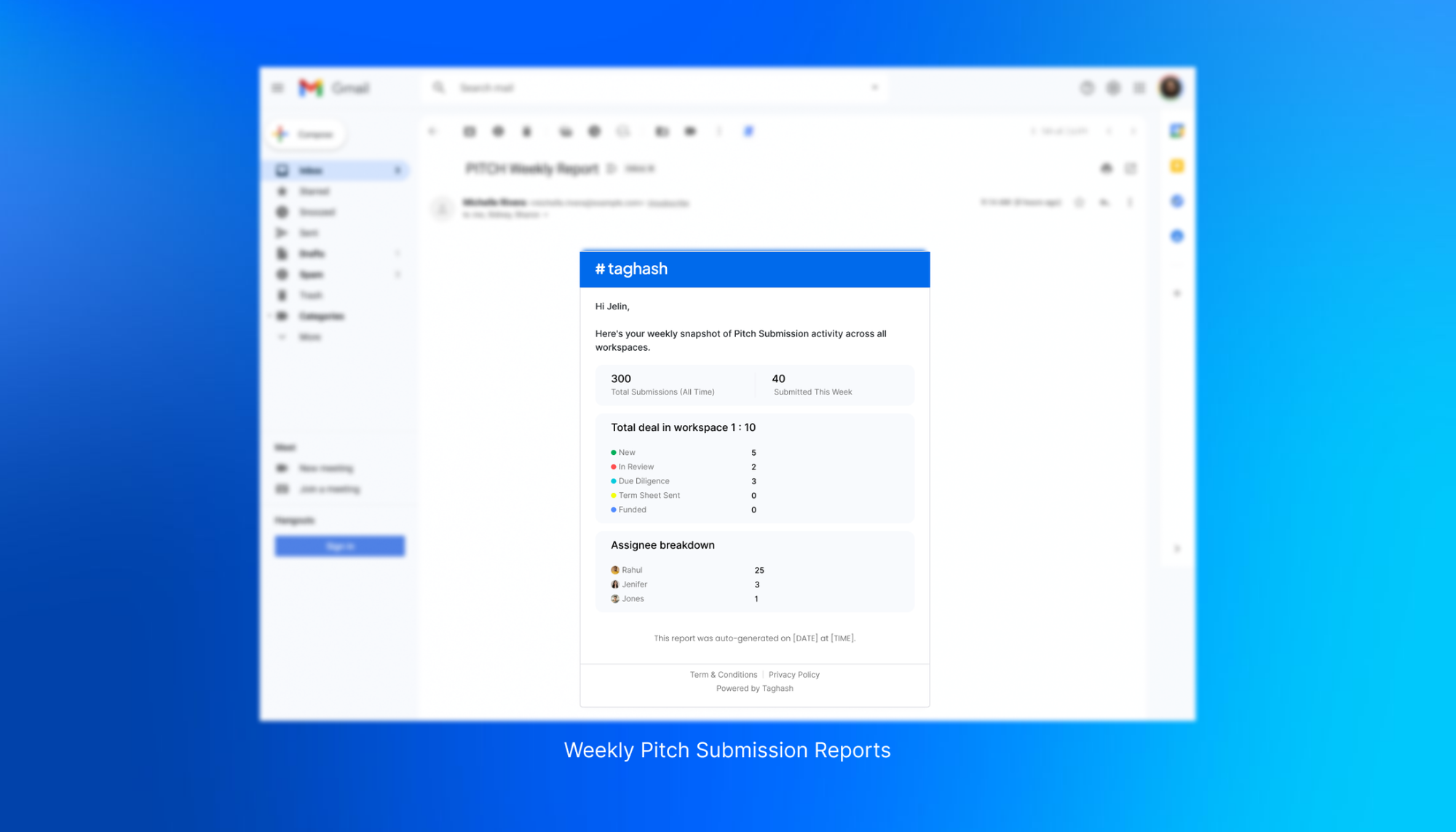
Stay on top of new applications without manual tracking. Receive daily and weekly email reports summarizing:
We hope these improvements make your day-to-day workflows smoother and more dependable. As always, your feedback helps us keep building around the needs of your team.
Log in, explore the latest updates and let us know where we can continue improving Taghash.
— The Taghash Team
View all

For AIFs subject to the annual PPM compliance audit, 30 September 2026 is the reporting deadline for FY 2025-26. This guide covers audit applicability, exemptions and the key considerations for fund teams preparing for the deadline.

LP consent involves more than collecting votes. This blog explains how AIF teams can manage investor selection, voting rules, weighted approvals, reminders and audit-ready records through a structured LP consent workflow.

IFSCA has introduced the Fund Management (Second Amendment) Regulations, 2026, bringing changes across Venture Capital, Restricted and Retail schemes. This blog covers the key updates to pre-close deployment, NAV and portfolio reporting, FME contributions, distribution rights, scheme documentation and governance.