


Private capital teams often spend time rebuilding company context before they can properly assess an opportunity. Taghash Data Enrichment helps keep deal records cleaner, more structured and easier to assess.

Aug 31, 2026
-
8
min to read
Private capital teams rarely receive a well-structured company record when an opportunity first enters the pipeline.
A company may come through a referral, email, pitch deck, form submission or direct outreach. Before assessment begins, the investment team may still need to gather information on the company overview, management team, funding history, investors, and contact details.
This research is necessary but repetitive. Team members may find different versions of the same information or save it across spreadsheets, notes and browser tabs. As more opportunities enter the pipeline, records can become inconsistent and context becomes harder to retrieve.
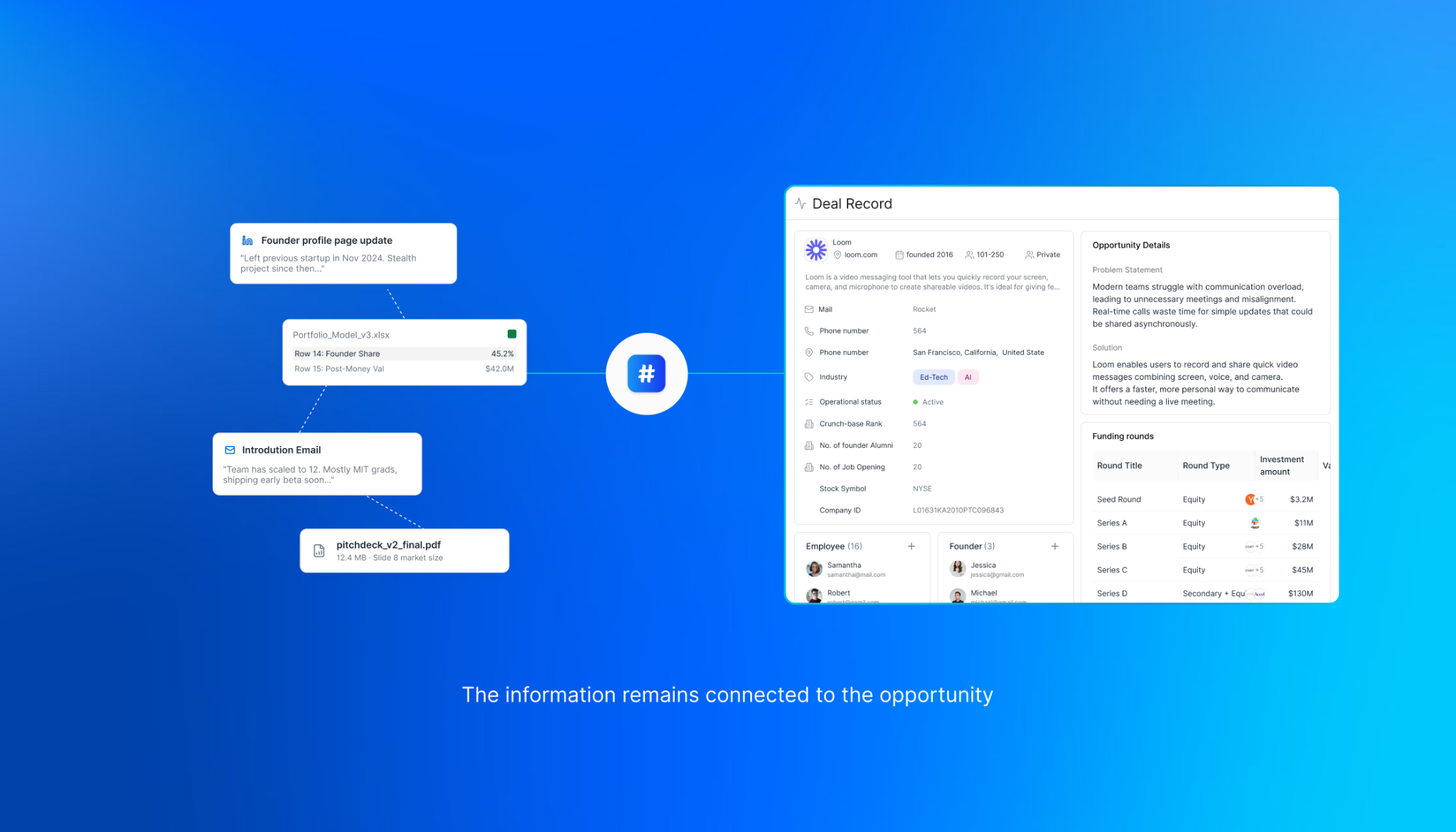
Taghash Data Enrichment brings available internal context and relevant external information into deal, company and contact records. The information remains connected to the opportunity, giving the investment team a stronger starting point for screening, pipeline reviews, diligence and investment committee discussions.
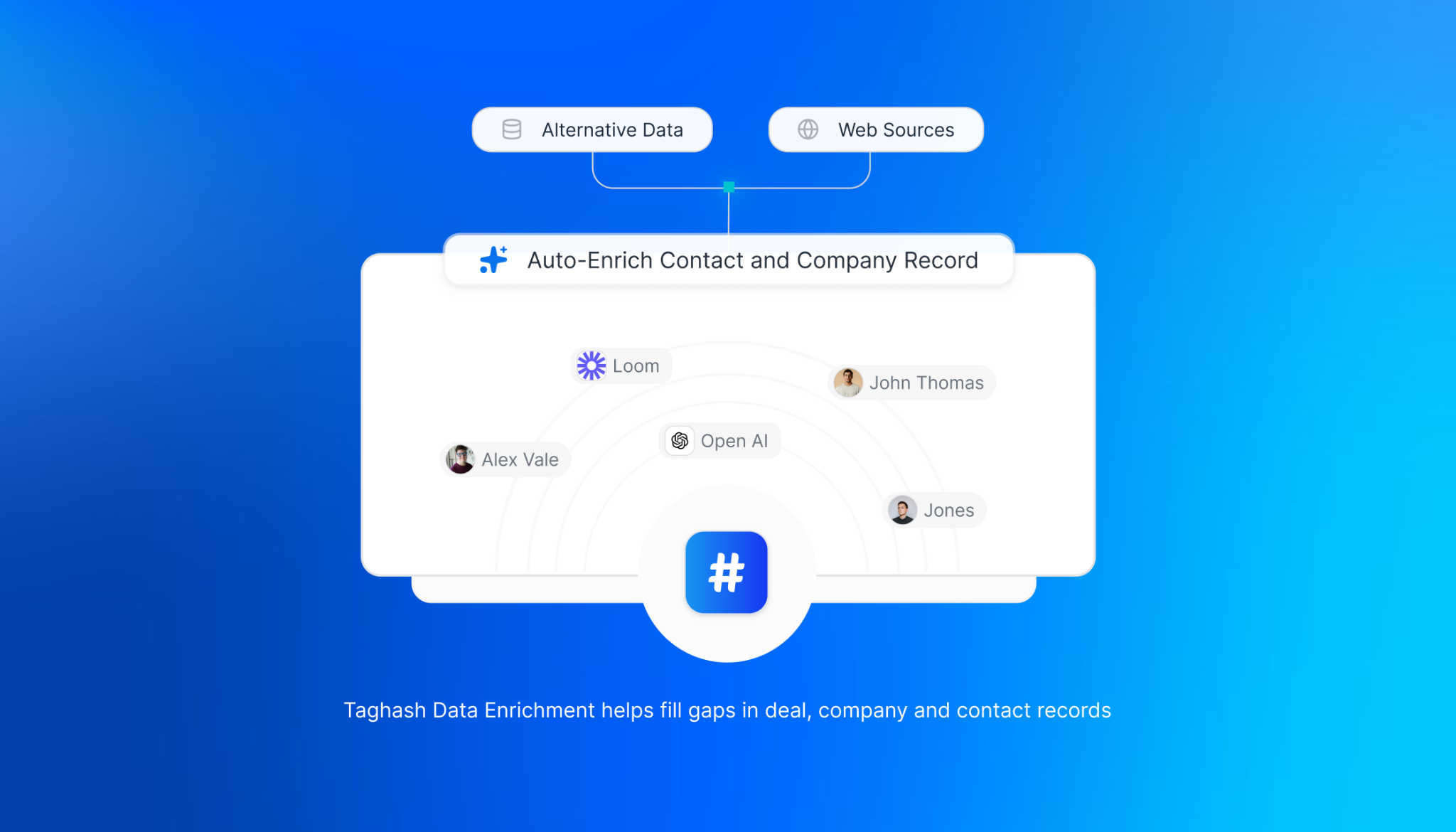
Taghash Data Enrichment helps fill gaps in deal, company and contact records.
It organizes company, people, funding, market and relationship context into structured fields connected to the opportunity under review. This reduces repeated research and makes each record easier to assess, compare and revisit.
A deal record rarely begins with every relevant field populated.
One team member may add the company name and website. Another may have founder contact details. The introduction may remain in an email, while the latest financing information or investor details appear in a separate database.
Company information also changes. Businesses hire executives, raise capital, complete acquisitions, enter new markets or change operating status. A record used during initial screening may no longer reflect the latest available information when the opportunity returns months later.
This leads to repeated research, inconsistent comparisons and scattered firmwide context.
The process begins with a deal, company or contact record inside Taghash.
A company website or domain can provide the starting point for identifying the business. The record may also receive context through email activity, forms, browser and LinkedIn extensions, and connected relationship records.
External information may include publicly available company and contact details. Internal context may come from records, activities, documents and relationships already connected inside Taghash.
Research saved only in notes is difficult to filter, compare or report on. Structured fields make company information easier to use during screening, diligence and internal discussions.
Depending on source availability and record setup, Taghash may organize information across areas such as:
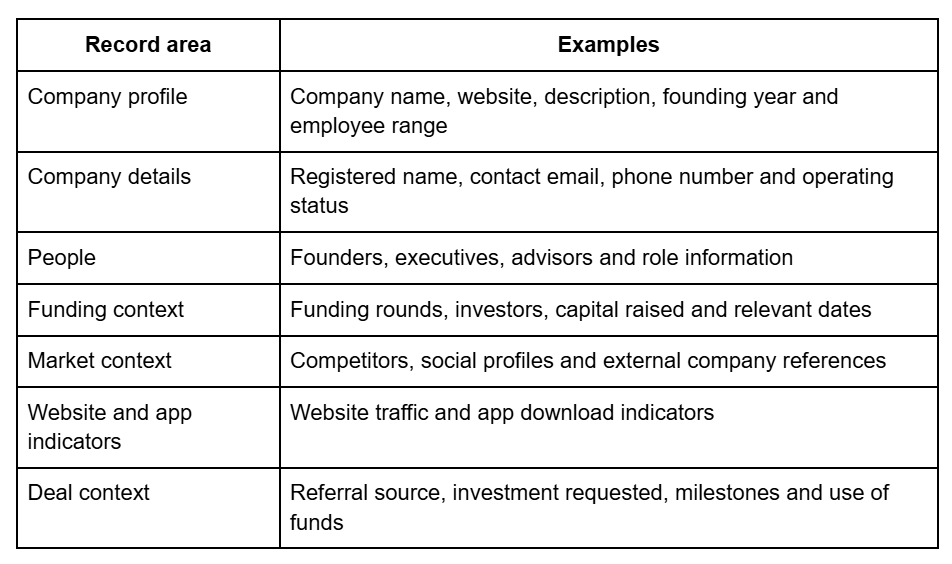
Some information may come from user input, imports, document extraction, custom fields or other Taghash workflows.
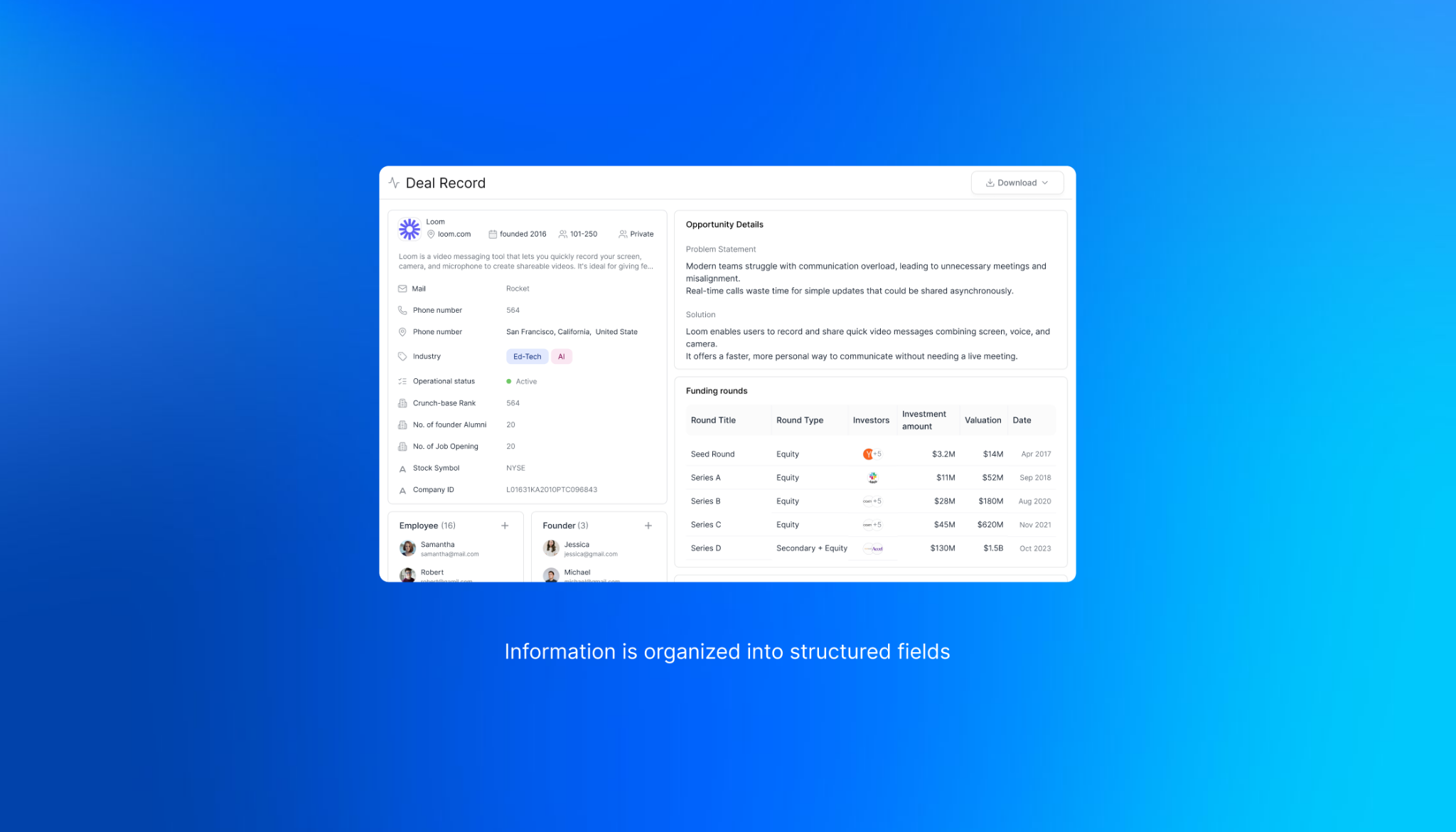
The company profile stays within the deal record instead of being stored in a separate research system.
The same record can also include pipeline stage, assignee, emails, notes, documents, signals, sign-offs, access requests, referral context, follow-up tasks and activity history.
This reduces switching between Taghash, research databases, spreadsheets and communication channels.
Enrichment provides a stronger starting point for assessment. It does not replace diligence or investment judgment.
The team can use the record to identify information gaps and prepare more focused questions. Material information should still be checked before it is included in an investment memo, shared externally or relied on during diligence.
The Taghash workflow includes an option to convert a deal into a portfolio company.
This allows company details, documents, people and deal history to remain connected after an investment. The fund team does not need to rebuild the record when the workflow moves from deal assessment to portfolio monitoring.
A structured deal record reduces the time spent checking several sources for basic company details. The team can review the company profile, management team, funding history, referral source and previous activity before deciding where deeper research is needed.
Using a common set of fields gives the team a more consistent information base for screening and discussion.
It does not replace investment judgment or turn assessment into a scoring exercise. It helps reduce inconsistencies caused by uneven record quality.
Company information becomes more useful when it is connected to people and relationship records.
Taghash Relationship Management maintains shared records across contacts and companies, including emails, meetings, introductions, notes and documents. It can also help the team identify existing relationships with founders, investors, advisors and partners connected to the company.
An opportunity may be declined, placed on a watchlist or reviewed again later.
When company details, documents, notes and earlier activity remain in one record, the next review can begin with the firm’s existing context instead of reconstructing the opportunity’s history.
Several Taghash capabilities add information or context to a deal record, but they support different parts of the investment workflow.
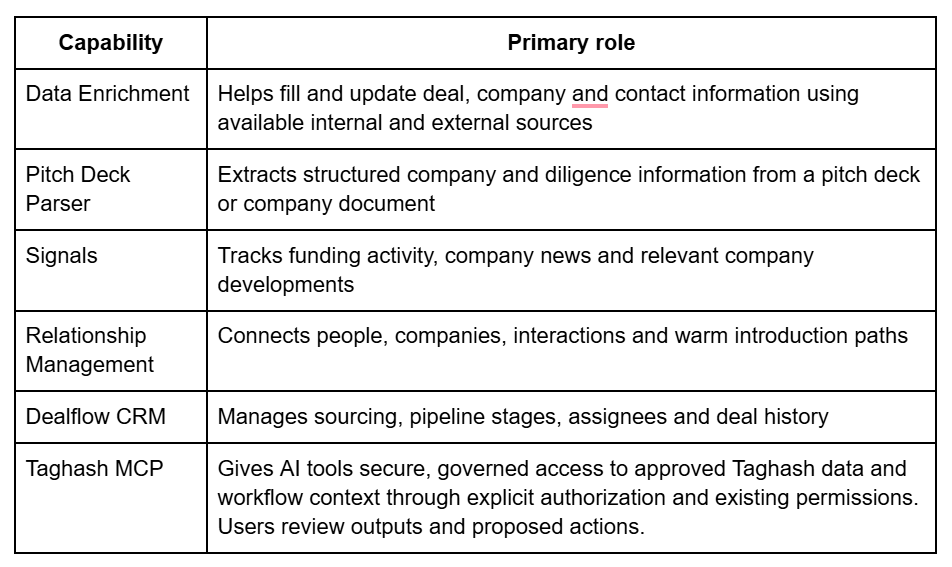
The Pitch Deck Parser extracts information from an uploaded document, while Data Enrichment works across the wider record.
Signals serves a different purpose. It surfaces funding activity, company news and other relevant developments alongside the deal record. A signal may prompt a new review, while enrichment improves the underlying record.
Learn more: How Taghash Signals work and what they track
Data enrichment supports the investment process. It does not replace investment judgment, founder or management discussions, market research, commercial diligence, financial diligence, operational diligence, technical diligence, legal or regulatory review, or verification of material company claims.
External information may be incomplete, delayed or inconsistent. Funding details may exclude undisclosed investors, employee figures may be estimates and website traffic may come from third-party measurement methods.
Investment teams should use enriched information as a structured starting point, then verify the details that could affect an investment decision.
The investment team should define the fields required before an opportunity enters a pipeline review. These may include sector, geography, investment stage, founding year, management details, referral source, funding history, current deal status and fit with the fund’s investment strategy.
Externally sourced facts should remain distinct from the team’s internal assessment. Material information should be confirmed through the appropriate diligence process.
Source dates and last-updated indicators should be checked where available. Corrections and later findings should remain connected to the record.
Data Enrichment forms part of Taghash’s connected operating layer for private capital teams.
A company record can begin in Dealflow CRM, remain connected to the firm’s relationship history and continue into Portfolio Management after an investment. Notes, documents, tasks, approvals and reporting context can remain within the same workspace.
A company profile in a separate database may answer a factual question. An enriched record inside the deal workflow can support screening, founder or management follow-up, diligence requests, investment committee preparation and the transition into portfolio monitoring.
Fund teams should not have to rebuild the same company profile each time an opportunity enters or returns to the pipeline.
Taghash helps enrich deal, company and contact records, organize information into structured fields and keep the context connected to the opportunity. Teams spend less time repeating basic research and gain a more consistent information base for screening, relationship review, diligence and follow-up.
Enrichment does not decide which company should receive investment. It gives the investment team a stronger, more structured record for making that decision with better context.
About Taghash
Taghash provides an end-to-end platform for venture funds, private equity, fund of funds and other alternative investment funds. Over the last seven years, we have served as the tech arm for top VCs, helping them manage operations across deal flow, portfolio, fund and LP management.
We also offer a suite of services like Contributor onboarding/servicing, Fund accounting, Fund administration, Compliance Management, Reporting & Portfolio management and Tax compliance.
Trusted by leading fund managers like Blume Ventures, Kalaari Capital and A91 Partners, we enable our clients to achieve greater success. Click here to book a demo.
View all

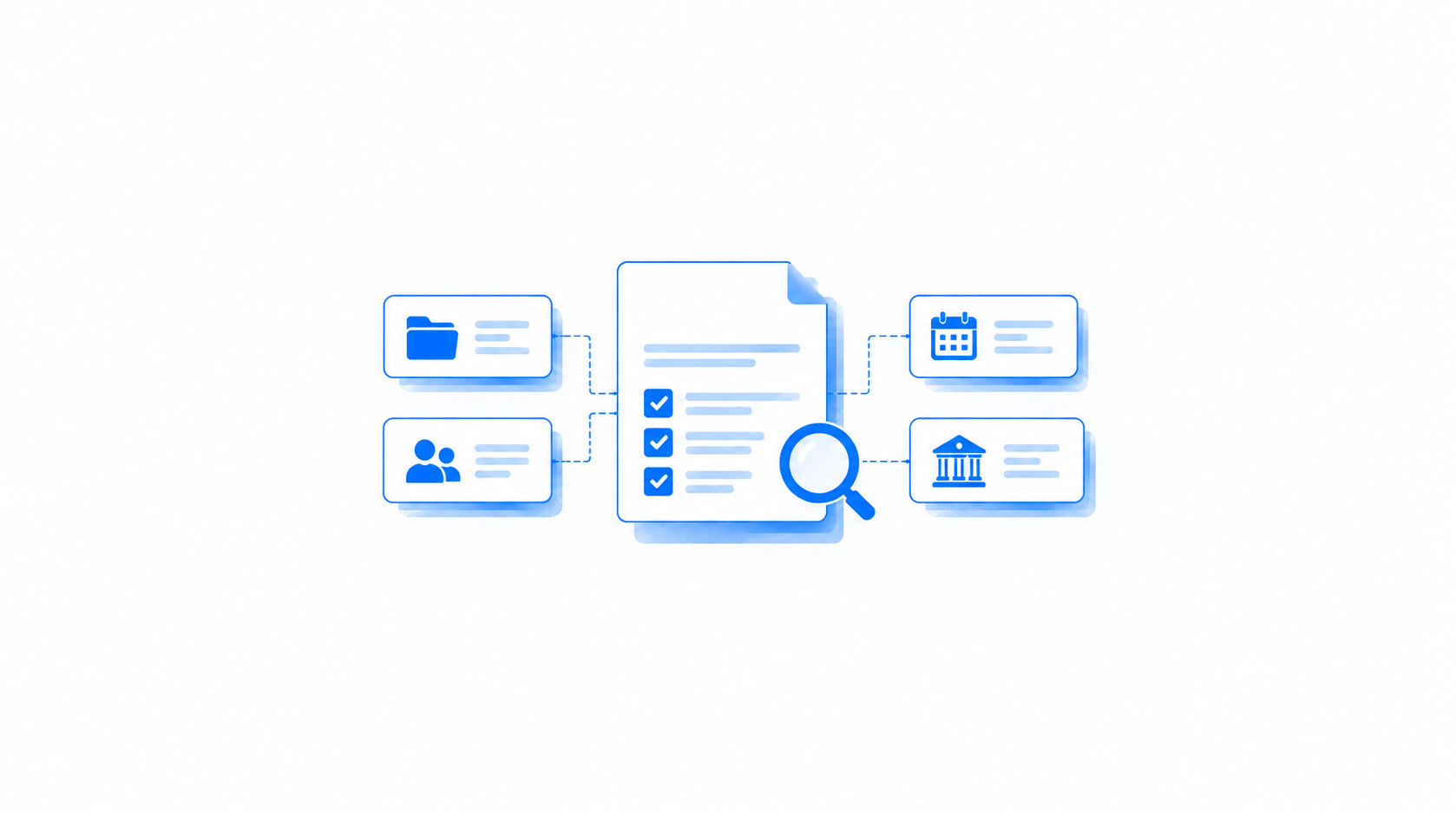
For AIFs subject to the annual PPM compliance audit, 30 September 2026 is the reporting deadline for FY 2025-26. This guide covers audit applicability, exemptions and the key considerations for fund teams preparing for the deadline.
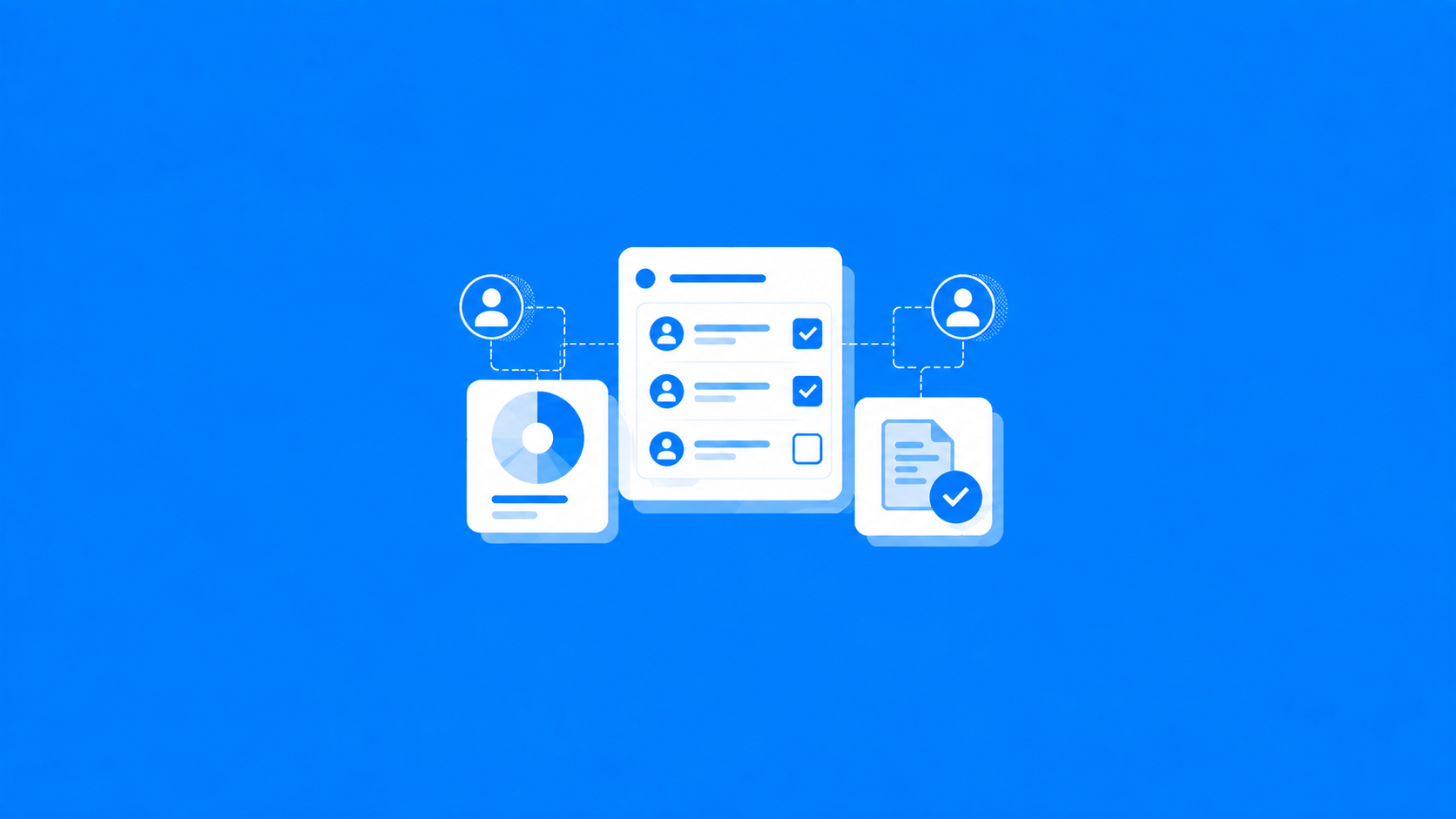
LP consent involves more than collecting votes. This blog explains how AIF teams can manage investor selection, voting rules, weighted approvals, reminders and audit-ready records through a structured LP consent workflow.
IFSCA has introduced the Fund Management (Second Amendment) Regulations, 2026, bringing changes across Venture Capital, Restricted and Retail schemes. This blog covers the key updates to pre-close deployment, NAV and portfolio reporting, FME contributions, distribution rights, scheme documentation and governance.